
Unknown's avatar

About Christopher J Wiles

Hey there. My name's Chris. I'm a teaching pastor at Tri-State Fellowship, and a research writer for Docent Research Group. Thanks for stopping by; be sure to stay connected by subscribing to blog updates and more.

The RESPONSIBILITY Principle–Sunday Recap (2 Corinthians 9)

We’ve talked about this before, right?  They’re called “virtual goods”—things you can purchase that don’t actually exist.  This means that if you’re playing a video game and your character needs, I don’t know, extra “lives” or a new piece of equipment, you can purchase these “items” for a small fee of only $0.99 or so.  Seems innocent, but it’s really just marketing genius.  Even though it’s just barely under a dollar, those purchases can really add up.  You’re probably familiar with Candy Crush—the popular game everyone plays on their phones during church.  The game’s free—but if you run out of “lives” (that is, you lose a turn, for those who haven’t played it) you have to either (1) wait or (2) purchase some new ones.  Well, according to ThinkGaming.com, the app on your phone (and everyone else’s) generated over $850,000 per day during the fiscal year of 2013.  Financial experts from Forbes magazine expect that by the close of this decade, “virtual goods” such as these will be an expanding industry—one that currently generates billions of dollars annually.

Personally, I always thought greed was bad when we bought, you know, stuff.  But now that “access” has replaced “ownership,” our spending priorities have changed remarkably.  Don’t misunderstand me; it’s not wrong to like stuff, and occasional entertainment is good for the soul.  But surely much of our lives are spent in excess.  The film Fight Club took an R-rated look at this—and how it’s destroying masculinity.  “The things you own,” says one of the film’s characters, “end up owning you.”

So as we continue in Paul’s letter to the Corinthians, we see that generosity and the cheerful giver seem a welcome antidote to a culture of consumerism:

Now lit is superfluous for me to write to you about the ministry for the saints, 2 for I know your readiness, of which I boast about you to the people of Macedonia, saying that Achaia has been ready since last year. And your zeal has stirred up most of them. 3 But I am sending the brothers so that our boasting about you may not prove empty in this matter, so that you may be ready, as I said you would be.4 Otherwise, if some Macedonians come with me and find that you are not ready, we would be humiliated—to say nothing of you—for being so confident. 5 So I thought it necessary to urge the brothers to go on ahead to you and arrange in advance for the gift you have promised, so that it may be ready as a willing gift, not as an exaction.

6 The point is this:  whoever sows sparingly will also reap sparingly, and whoever sows bountifully will also reap bountifully. 7 Each one must give as he has decided in his heart,  not reluctantly or under compulsion, for God loves a cheerful giver. 8 And God is able to make all grace abound to you, so that having all sufficiency in all things at all times, you may abound in every good work. 9 As it is written,

“He has distributed freely, he has given to the poor;

his righteousness endures forever.”

10 He who supplies seed to the sower and bread for food will supply and multiply your seed for sowing and increase the harvest of your righteousness. 11 You will be enriched in every way to be generous in every way, which through us will produce thanksgiving to God. 12 For the ministry of this service is not only supplying the needs of the saints but is also overflowing in many thanksgivings to God. 13 By their approval of this service, they will glorify God because of your submission that comes from your confession of the gospel of Christ, and the generosity of your contribution for them and for all others,14 while they long for you and pray for you, because of the surpassing grace of God upon you. 15 Thanks be to God for his inexpressible gift! (2 Corinthians 9:1-15)

If you were here on Sunday, you got to here Tim Lester’s excellent message on this passage—as well as understanding our own financial responsibilities toward God.  Using the imagery from this passage, Tim highlighted that the “seed” is the resources that we invest toward God and his kingdom—in our context we might immediately identify that as the money you place in the weekly church offering.  The “bread” represents the resources you consume for you and your family.

Now, while “tithing” (giving 10% of one’s income) had its roots in the Old Testament (Leviticus 27:30-33, to be exact), we’d be hard pressed to find New Testament passages that said that this law applies to us today.  But that doesn’t change our approach to giving—in fact it deepens our needs to invest our “seed” in God’s kingdom.

If all of our resources are God’s, then our task—our responsibility—is to surrender it back to him.  We enjoy the blessings of his “bread,” and we faithfully commit ourselves to give our “seed” back to God.  So yes, tithing isn’t a bad standard, but for some it represents a starting point rather than an unchanging standard.

Tim specifically stated on Sunday, that “it is every person’s responsibility to search out with God how much to give.”  If the gospel liberates me from finding identity through earthly treasure, then I am now free to pursue God’s kingdom responsibilities.

 

The RESPONSIBILITY principle (2 Corinthians 8:1-8)

It must seem strange to mix faith and finance.  I always recall listening to a live performance from U2, where Bono pauses during a song to level a criticism at TV evangelists: “Well the God I believe in isn’t short of cash, mister!”  And he’s right; God certainly has the power to accomplish his vision without the need of our resources.  But to do so would be to exclude the radically relational nature of God’s kingdom, a kingdom in which we participate through our time, energy, and yes: money.

This Sunday we move from seeing our identity in Christ to seeing our responsibility as stewards and caretakers of his resources.  We turn now to a letter Paul wrote to the church in Corinth.  In 1 Corinthians, Paul had been focusing on how to navigate the cultural weirdness of Corinth—sin city of the ancient world.  In 2 Corinthians, his focus is on how we specifically do ministry in such an environment.  Among the interweaving themes, we find Paul addressing the issue of collection for the poor (“the relief of saints”—v. 4).  This collection would not only serve to benefit the poor, but also solidify support for the growing mission to reach non-Jews with the gospel of Jesus:

We want you to know, brothers, about the grace of God that has been given among the churches of Macedonia, for in a severe test of affliction, their abundance of joy and their extreme poverty have overflowed in a wealth of generosity on their part. For they gave according to their means, as I can testify, and beyond their means, of their own accord, begging us earnestly for the favor of taking part in the relief of the saints— and this, not as we expected, but they gave themselves first to the Lord and then by the will of God to us. Accordingly, we urged Titus that as he had started, so he should complete among you this act of grace. But as you excel in everything—in faith, in speech, in knowledge, in all earnestness, and in our love for you[c]—see that you excel in this act of grace also.


I say this not as a command, but to prove by the earnestness of others that your love also is genuine. For you know the grace of our Lord Jesus Christ,  that though he was rich, yet for your sake he became poor, so that you by his poverty might become rich. 10 And in this matter I give my judgment: this benefits you, who a year ago started not only to do this work but also to desire to do it. 11 So now finish doing it as well, so that your readiness in desiring it may be matched by your completing it out of what you have. 12 For if the readiness is there, it is acceptable according to what a person has, not according to what he does not have. 13 For I do not mean that others should be eased and you burdened, but that as a matter of fairness 14 your abundance at the present time should supply their need, so that their abundance may supply your need, that there may be fairness. 15 As it is written, “Whoever gathered much had nothing left over, and whoever gathered little had no lack.” (2 Corinthians 8:1-8)

In his commentary on the Corinthians letters, Ben Witherington of Asbury seminary observes the way such commands toward generosity go against the flow of ancient culture (and our own, for that matter).  How so?  Because in the ancient world, they believed strongly in the idea of “patronage”—where a person pays tribute to a higher official, and in exchange would receive blessing or an elevated social status.  In other words, it was transactional.  You give; you get.  But here we find none of that—we find instead a new interweaving of social relationships.

The gospel is like that.  No longer are we bound to laws of karma and reciprocity.  We show and share love because our lives are patterned after Jesus.  This grace-based economy is less concerned with the result and more focused on process.  Rather than a purely vertical approach, the grace based system is an approach that reaches upward toward God and outward toward others.  Rather than be preoccupied with advancement, it is saturated with humility.

Social analysts Christian Smith and Michael Emerson recently published a book called Passing the Plate, in which they analyzed the broad trends that contribute to a lack of giving.  They highlighted six areas:

1) America’s culture of mass consumption

2) Pastors’ fear of discussing money

3) Ignorance of Christian teaching about financial giving

4) Mistrust for leadership or organizations

5) Lack of conversations about money among Christians

6) Failure to adopt routine methods for giving.

How does the gospel counter such trends?  We can answer that by looking at some specific types of givers:

  • The non-giver

Motivation: “It’s my money.  Who are you to tell me what I should do with it?”

Gospel response: Everything we have belongs to God.  The gospel redeems us from our allegiance to things and provokes us to use our resources to the furthering of His kingdom.

  • The grudging giver

Motivation: “I give—when asked.  I don’t really trust the church.  I just do it because I know I’m obligated.”

Gospel response:  The gospel transforms duty into delight and obligations into habits.  If I see God as judge, I am condemned to a life of obligation and servitude—including my finances.  But if I see God as my adoptive Father—motivated by love—then I am motivated by this same love and use my resources generously for the benefit of his kingdom.

  • Services-rendered giver

Motivation: “I give because I take part in the life of the church.  My kids are in the nursery, I take part in a Bible study—it seems I should give my fair share.”

Gospel response: Jesus never gave a fair share but gave far more—out of love.  The gospel provokes us to generosity that transcends the normal boundaries of reciprocity and market value.  The gospel prompts me to give unfairly, because my life is not motivated not by karma but by grace.

  • The cheerful giver

Motivation: Nothing I have is mine.  Every blessing I receive comes from God’s great treasure chest of grace. I give out of a genuine love for Christ and His church.  Every dollar is a chance to see God’s Kingdom furthered.

All of us could do better at moving away from self and toward a radical new way of looking at our financial responsibilities.  But this starts by looking at our inward motivations, and whether our responsibilities are shaped by the gospel, or shaped by our own ideas of supply and demand.


The Myth of Excess (Ecclesiastes 2)

Let’s start basic: we were made for this world.  Originally, I mean.  In the story of Genesis, God creates man “and put him in the garden of Eden to work it and keep it” (Genesis 2:15).  This happened before sin, before everything went horribly wrong.  So yes, we were made to take care of the environment that God placed us in.  Even paradise was no place for the lazy.

Now, we might take a moment to reflect on this, specifically in light of what we might call our “vocation.”  Where has God placed us?  One of the most recurring temptations throughout human history has been to drive a wedge between the “sacred” and the “secular”—that is, to value the “spiritual” life to the neglect of the earthly one.  But that’s hardly necessary—nor is it helpful.  No, from literal gardeners to teachers to accountants, each of us serves to tend to the created world around us through creativity and through relationships.

So the problem has never been the work itself.  The problem has always been an issue of worship.  Remember Augustine?  We’ve referenced him before.  He thought of the human heart as something of a pyramid.  You will never flourish, Augustine would say, unless God rests at the top of this pyramid, and your lesser loves—such as career and family—occupy the other spaces below.  Sin is therefore a form of misdirected worship—of placing something else at the top of the pyramid, something through which we find our comfort, joy, and satisfaction apart from God.   That’s why in Eden we discover that our ancestors “saw that the tree was good for food, and that it was a delight to the eyes, and that the tree was to be desired to make one wise” (Genesis 3:6).  The tree—the only one that God commanded not to eat from—suddenly went from mere object to god.

And have you ever read a better marketing slogan?  Take out “fruit” for a second, and insert—I dunno, an SUV, or a famous brand of jeans.  Aren’t those things “a delight to the eyes?”  Don’t we fool ourselves into thinking that they are “good for gaining wisdom?”  There’s a reason that advertisers are often former religious folks—they know how to hook you.   In his famous work Amusing Ourselves to Death, social analyst Neil Postman observes that rarely do TV commercials advertise their actual products.  Instead, they usually focus on the character of the consumer.   Eat this.  Wear that.  Use this product, and you’ll be happier than you were before.

Jean Kilbourne of NPR  goes further, citing research that argues “that the label of our shirt, the make of our car, and our favorite laundry detergent are filling the vacuum once occupied by religion, education, and our family name.”  Advertising, she says, has a spiritual component:

“Advertising is not only our physical environment, it is increasingly our spiritual environment as well. By definition, however, it is only interested in materialistic values….Advertising and religion share a belief in transformation and transcendence, but most religions believe that this requires work and sacrifice. In the world of advertising, enlightenment is achieved instantly by purchasing material goods. The focus of the transformation has shifted from the soul to the body. Of course, this trivializes and cheapens authentic spirituality and transcendence. But, more important, this junk food for the soul leaves us hungry, empty, malnourished.” (Jean Kilbourne, Can’t Buy My Love)

In the Bible, we meet a man who’s had this exact experience.  In the book of Ecclesiastes, the mysterious “Teacher” (who writes as if he were Solomon, though he mysteriously never identifies himself…) writes of his own quest for identity through material wealth:

“I said in my heart, “Come now, I will test you with pleasure; enjoy yourself.” But behold, this also was vanity. 2 I said of laughter, “It is mad,” and of pleasure, “What use is it?” 3 I searched with my heart how to cheer my body with wine—my heart still guiding me with wisdom—and how to lay hold on folly, till I might see what was good for the children of man to do under heaven during the few days of their life. 4 I made great works. I built houses and planted vineyards for myself. 5 I made myself gardens and parks, and planted in them all kinds of fruit trees. 6 I made myself pools from which to water the forest of growing trees. 7 I bought male and female slaves, and had slaves who were born in my house. I had also great possessions of herds and flocks, more than any who had been before me in Jerusalem. 8 I also gathered for myself silver and gold and the treasure of kings and provinces. I got singers, both men and women, and many concubines, the delight of the sons of man.

9 So I became great and surpassed all who were before me in Jerusalem. Also my wisdom remained with me. 10 And whatever my eyes desired I did not keep from them. I kept my heart from no pleasure, for my heart found pleasure in all my toil, and this was my reward for all my toil. 11 Then I considered all that my hands had done and the toil I had expended in doing it, and behold, all was vanity and a striving after wind, and there was nothing to be gained under the sun.” (Ecclesiastes 2:1-11)

Now, you might be thinking that there are things on this list you find morally objectionable.  But that’s half the point: he’s sought identity and purpose through things, through stuff.  But the more he’s searched, the more he was left empty.

The Teacher goes on to discuss other sources of identity—education, career—but even these fail to slake his spiritual thirst.  Finally he draws a strange conclusion—a conclusion he actually repeats five times throughout this strange book:

24 There is nothing better for a person than that he should eat and drink and find enjoyment in his toil. This also, I saw, is from the hand of God, 25 for apart from him who can eat or who can have enjoyment? 26 For to the one who pleases him God has given wisdom and knowledge and joy, but to the sinner he has given the business of gathering and collecting, only to give to one who pleases God. This also is vanity and a striving after wind. (Ecclesiastes 2:24-26)

So The Teacher isn’t telling us to abandon all hope.  No; he’s saying we should find joy in the material world (!).  This is a far cry from the anti-materialistic views of other religions, such as Buddhism.  Why would The Teacher reach this verdict?  Because he recognizes that these good and perfect gifts come “from the hand of God.”  The problem of self-indulgence can’t be solved through self-denial.  That just replaces one idol (wealth) with another (self-righteousness).  Instead, we must turn our focus away from the blessings and toward the Blesser; away from the gifts and toward the Giver.

I love John Mayer’s music.  In a recent interview he confesses to being “a recovered ego addict.”  It’s a statement that instantly made me recall a speech he’d made during a live performance on his album “Where the Light Is.”  What he tells the crowd was almost straight out of Ecclesiastes:

“I’ve tried every approach to living. I’ve tried it all. I haven’t tried everything, but I’ve tried every approach. Sometimes you have to try everything to get the approach the same, but whatever. I’ve tried it all. I’ve bought a buncha stuff. ….I thought I would shut myself off. I thought maybe that’s cool. Maybe that’s what you have to do to become a genius is you have to be mad. So if you can get mad before the word genius, then maybe you can make genius appear. Right? That doesn’t work either.

And I’m in a good place. I’ve paced myself pretty well. I’m 30, I’ve seen some cool stuff. I made a lot of stuff happen for myself. I made a lot of stuff happen for myself. That’s a really cool sentence when you’re in your 20s, right? “I made it happen for myself.” But all that means is that I’ve just somehow or another found a way to synthesize love. Or synthesize soothing. You can’t get that, and what I’m saying is I’ve messed with all the approaches except for one, and it’s gonna sound really corny, but that’s just love. That’s just love.

I don’t know where this musician is spiritually, but he’s onto something altogether basic.  Source your identity in things and achievements and it will lead to greed.  Source your identity in love and it will lead to gratitude.  Jesus’ self-sacrificial love was—and is—the greatest example of love of all.  Because we are united with him in death and resurrection, we can put to death the desires that once ruled us, and stand amazed at what he’s accomplished on our behalf.  Is it any wonder that the New Testament would so frequently use “riches” language to describe the gift of forgiveness and transformation?

“the riches of His kindness, restraint, and patience” (Romans 2:4)
“oh, the depth of the riches both of the wisdom and the knowledge of God” (Romans 11:33)
“the riches of his grace” (Ephesians 1:7)
“the glorious riches of his inheritance” (Ephesians 1:18)
“the incalculable riches of the Messiah” (Ephesians 3:8)
“the riches of his glory” (Ephesians 3:16)

What more do we need?


Benediction (Hebrews 13:17-25)

Closing words are hard—especially after a sermon.  Usually it’s the time when everyone starts gathering together their newsletters and belongings to make a dash for the local IHOP.  And sometimes—much to our collective horror—the pastor starts to seem to wind down only to get started all over again (not that I’ve ever done this) and you can only hope no one heard your stomach growling just now.

But while the closing words of New Testament letters often read like something of a formula, we can’t ignore the real gravity of their words.

The writer of the letter of Hebrews winds down his letter first by concluding some of his earlier thoughts regarding church leaders:

17 Obey your leaders and submit to them, for they are keeping watch over your souls, as those who will have to give an account. Let them do this with joy and not with groaning, for that would be of no advantage to you. 18 Pray for us, for we are sure that we have a clear conscience, desiring to act honorably in all things. 19 I urge you the more earnestly to do this in order that I may be restored to you the sooner. (Hebrews 13:17-19)

Today’s world assumes that all hierarchy must be abusive.  “Hierarchy promotes an underground,” I’ve heard it said—meaning that if some people have power over a larger group, the larger group becomes oppressed and/or embattled against their leaders.  But the view promoted here in the Bible is of church leaders—pastors, elders—who show love to those in their care.  Further, these leaders are under the ultimate authority of God, and will one day have to answer not just for themselves (and their families, for those that are married) but also those under their spiritual care.  So it makes sense, then, that the writer would urge his readers to pray for them (v. 18).  Now, you might have caught the phrase “restored to you sooner” in verse 19.  What this means is unclear, especially since we don’t know who the author is.  But there seems to be a deep relationship here, one currently challenged by geographic separation; he longs for reunion, one that could be expedited through God’s intervention.

Finally, now, he turns to the matter of the “benediction” of this letter:

20 Now may the God of peace who brought again from the dead our Lord Jesus, the great shepherd of the sheep, by the blood of the eternal covenant, 21 equip you with everything good that you may do his will, working in us that which is pleasing in his sight, through Jesus Christ, to whom be glory forever and ever. Amen.

22 I appeal to you, brothers, bear with my word of exhortation, for I have written to you briefly. 23 You should know that our brother Timothy has been released, with whom I shall see you if he comes soon. 24 Greet all your leaders and all the saints. Those who come from Italy send you greetings. 25 Grace be with all of you. (Hebrews 13:20-25)

You probably noticed the reference to Timothy—apparently he had been confined (imprisoned?) at some point, but some of the details here are left only to scholarly speculation.  You might also have been amused that the author describes this sermon as “brief.”

What can we learn from the close of letters like this?

  • First, that theology is deeply relational. Yes, the letter/sermon of Hebrews was complex, but ultimately was intended to be anchored in the day-to-day realities of human experience and Christian community.
  • Second, that the application of Christian principles is an ongoing process. We tend to think of “amen” as the conclusion of “church”—but it’s really just the beginning.  The benediction isn’t about the end of something, but about the commencing of the church’s mission.  We would do well to think of the benediction as the starter’s pistol rather than the bell that concludes a school day.
  • Finally, that worship and “equipping” are one and the same. We tend to associate worship with emotion so strongly that we fail to recognize the clear necessity that worship is both the goal and driving force of mission.  John Piper once famously wrote that “mission is not the goal of the church; mission is.  Evangelism happens because worship is not happening.”  Even if you think he overstates his point, you must agree: worship lasts forever.  Our mission is to reach the unchurched and to equip others to participate in the life of the kingdom.

We hope that you’ve enjoyed this journey through the book of Hebrews.  We certainly have great things planned for the rest of the Spring as well as through the summer, so please stay tuned and keep tracking with us.

A Lasting City (Hebrews 13:9-16)

Sometimes it seems as though the world has lost all sense of fixed points.  Truth, we’re repeatedly told, has become relegated to matters of personal perspective.  As John Dominic Crossan once put it, “There is no lighthouse keeper.  There is no lighthouse.  There is no dry ground.  There are only people living on rafts made from the own imaginations.  And there is the sea.”

In his book Searching for God Knows What, Donald Miller paints us a picture of life at sea.  He calls it his “lifeboat theory.”  Huddled together, we tend to identify ourselves with stronger people, and distance ourselves from others.  Socially, this might mean we try and look and act like those we consider our social betters—and try not to let ourselves get associated with the socially awkward or the outcasts.

But Jesus did the opposite.

In Hebrews 13, the writer presses home the idea of identifying with Jesus:

9 Do not be led away by diverse and strange teachings, for it is good for the heart to be strengthened by grace, not by foods, which have not benefited those devoted to them. 10 We have an altar from which those who serve the tent have no right to eat. 11 For the bodies of those animals whose blood is brought into the holy places by the high priest as a sacrifice for sin are burned outside the camp. 12 So Jesus also suffered outside the gate in order to sanctify the people through his own blood.13 Therefore let us go to him outside the camp and bear the reproach he endured. 14 For here we have no lasting city, but we seek the city that is to come. 15 Through him then let us continually offer up a sacrifice of praise to God, that is, the fruit of lips that acknowledge his name. 16 Do not neglect to do good and to share what you have, for such sacrifices are pleasing to God. (Hebrews 13:9-16)

Our world is indeed swirling with an ocean of “diverse and strange teachings.”  Those of us in the lifeboat would fare socially better if we found the strongest and most socially acceptable teachings and followed then.  And you can bet that today we have our fair share of those who construct a whole set of code words to define the religion of the day.  Tolerance.  Justice.  Privilege.  Equality.  Such noble words can hardly be argued against, right?  Yet to believe in Jesus is certainly to be associated with a backwards way of thinking, to be labeled a bigot—or worse.

It’s not going to get better.

Perhaps instead we should be grateful to endure mere mockery and not martyrdom—though all the while remembering that many around the world (and in the Middle East during this era) who have indeed shed blood for their faith.

But no, even for us, it hurts—to lose friends, to experience ridicule. But we can be confident that Jesus—our perfect sacrifice—suffered “outside the gate,” on a hilltop known as the place of the skull.  And it’s there that we find what social analyst Peter Berger once called “a confrontation of our perception of society with the figure of Jesus Christ.”  It’s safe inside the Christian bubble, Berger would say.  Safe to think that if we keep ourselves safe and secure, manage to raise moral children we can remain unspoiled by the harsh edges of a hurting culture.  But this “figure of the crucified one…continues to haunt both the oppressors and the oppressed.”  Christians are therefore faced with “the demand to follow this figure of the crucified one.”

“This demand calls us to an exodus, not only out of Egypt of social mythology but also out of the Zion of religious security.  The exodus takes us out of our holy city, out past the scene of cross and resurrection, and beyond the desert in which God is waiting.  In this desert, all horizons are open.”

It’s no wonder, then, that the writer of Hebrews tells us that good works “are pleasing to God” (13:16), because there’s a good chance your faith will make everyone around you uneasy—if not angry.  And we, united with Christ in his death and resurrection, are given the soul-stirring power to endure.  Endure ridicule.  Endure suffering.  Endure hardship.  Jesus will not make life better—but he promises a “lasting city” to come at the time of his return.

For now we occupy dust-swept streets and the driving rains of cultural opposition.  We look not to man for our approval, nor to our earthly city for comfort.  We look instead to another set of streets, streets where joy flows like a river from heaven’s throne.  A city where persecution and suffering fall from our eyes like scales, that we might behold the risen Savior with gladness.  When we go there, we go there with Him, a Savior who shows us a place with neither sorrow nor shame, and we walk on the streets that have no name.

The cross-shaped church (Hebrews 13:1-8)

Love’s become something of a “bankrupt” word in today’s society.  Not that we use it too little, but that we use it far too easily and too cheaply.  I can “love” anything.  I love music.  I love tacos.  I’m suddenly thinking of Steve Carrell’s character from Anchorman who so boldly proclaimed: “I love lamp.  I love lamp.”

Yet I sincerely doubt that our affection for music, tacos, or…lamp…should be compared to the love we might cultivate for our families, our close friends, or from God.  And if you’ve spent any amount of time in Christian community (or any community, for that matter), you know that love can often be a struggle.  Love demands personal choice, and it can only be made visible through action.

Think about the way we often “do” church.  We become easily focused on externals—on presentation, design schemes, quality of music.  Don’t misunderstand; God certainly calls us to labor to present excellence before him.  But when Jesus shares his final meal with his followers, he tells them that “if you have love for one another” then “all people will know that you are my disciples” (John 13:35).  Don’t miss that.  He didn’t say: “By this all people will know that you are my disciples: if you have a really great ‘visual brand.’” He didn’t say: “By this all people will know that you are my disciples: if you create really successful Christian films.”  He didn’t say: “By this all people will know that you are my disciples: if you have a great bumper sticker or t-shirt slogan.”  Love is Christianity’s guiding principle.

It’s only fitting, then, that the author of Hebrews turns his attention to the believers of the community.  Previously, he’d spent quite some time explaining what Christian character looks like under pressure from outside; now he focuses on the love that is cultivated from within Christian community itself.  Hebrews 13 verse 1 even serves as something of a summary verse for the text that follows:

Let brotherly love continue. 2 Do not neglect to show hospitality to strangers, for thereby some have entertained angels unawares. 3 Remember those who are in prison, as though in prison with them, and those who are mistreated, since you also are in the body. 4 Let marriage be held in honor among all, and let the marriage bed be undefiled, for God will judge the sexually immoral and adulterous. 5 Keep your life free from love of money, and be content with what you have, for he has said, “I will never leave you nor forsake you.” 6 So we can confidently say,

“The Lord is my helper;

I will not fear;
what can man do to me?”

7 Remember your leaders, those who spoke to you the word of God. Consider the outcome of their way of life, and imitate their faith. 8 Jesus Christ is the same yesterday and today and forever. (Hebrews 13:1-8)

Biblical writers described love in a variety of ways.  Here, we can see three distinct categories of love—which we can than compare to other writings of the first-century Bible:

  • Love for others (Hebrews 13:2-3): This command comes not just from verse 1, but becomes all the more specific in extending compassion to “strangers” (v. 2). The writer even suggests that in so doing, we might even have extended mercy to God’s “undercover” agents—that is, to “entertain” angels without ever realizing it.  Secondly, the people are commanded to not only “remember” those in prison, but to suffer with them.
  • Love for God (Hebrews 13:4-6): This is a bit more implicit than explicit, in that the author focuses on personal idols, including lust (v. 4)—that is, pursuing sex outside of God’s design in marriage—and greed (v. 5). Why is this important?  Because wealth and pleasure can be powerful forces.  The danger of idolatry is not only that we worship the wrong thing (such as sex and money), but that we fail to allow God to be our ultimate source of comfort, joy, and security.
  • Love for church leaders (Hebrews 13:7): Finally, the writer endorses a love for one’s church leaders. And if you think about this, in the first century world this would have referred almost exclusively to local church ministry.  If you’re like me, you probably can name some pastors that speak to your heart and mind in a way that stirs your affections for Jesus and sharpens our minds for service in his kingdom.  But our affections (at least for church leaders) should primarily rest on the leaders of the local church—not just your pastors, mind you, though we are each appreciative of the support of our folks at Tri-State Fellowship, but also the series of other leaders including elders, administrative staff, community group leaders, the wide array of volunteers that serve inside and outside the walls, and that’s not even to mention the unsung heroes devoted to children’s ministries.

In his book Cruciformity, Michael Gorman uses an elaborate word to describe the church.  The church is “cruciform” he says—meaning “cross-shaped.”   Look at the list again; what do you notice?  Well, love for others is a horizontal relationship.  Love for God is a vertical relationship.  Put them together and what do you have?  The shape of the cross.  Church leaders have a role in helping maintain this shape.  And finally (v. 8), Jesus becomes not merely the object of the Christian faith; he becomes the model of the Christian faith.

I can appreciate the fact that for many of you, the words “church” and “love” don’t seem to belong in the same sentence.  It’s rare for me to meet anyone who doesn’t have some “horror story” of past hurts from their prior experience in a church.  There might be more than a few times when it’s tempting to say you “love” church but don’t even mean in half as much as you might love tacos.  This, I think, is why we need to see Jesus as faithful even when we feel faithless.  United with Christ, I can pray and rely on his power to help me love the unlovely.

At Tri-State Fellowship, we can never have too many volunteers.  Children’s ministries in particular will always have ongoing needs—though there are many other areas as well.  If you’re waiting for a “more qualified” person to step in ahead of you, then I’d gently suggest that you haven’t properly applied the gospel to this area of your life.  If you’re waiting for when “things settle down” in your life, then I’d suggest that perhaps you haven’t properly applied the gospel to this area of your life.  The faithfulness of Jesus carries us through; therefore even if I feel unqualified Jesus is able to show his love through my humility and my weakness.  And even if I feel overwhelmed with other duties, the Holy Spirit supplies me with strength to commit to the task ahead of me—plus, if we all work together we can share in this kingdom labor.

If you attend Tri-State with any regularity, we would welcome and value your service.  Would you consider showing love by serving with us?

A Tale of Two Mountains (Hebrews 12:18-29)

Are there places that hold special meaning for you?  I don’t use the term “place” in any metaphorical sense—I mean are there places that evoke deep-seated memories?  For some, maybe it’s the restaurant where you met your spouse for the very first time.  Maybe it’s the smell of the halls of the old high school you visited for your reunion.

There’s a field of research out there called “environmental psychology,” which in turn describes something called “place attachment.”  As the name suggests, place attachment is the deep emotional connection between an individual and a specific geographic location.  For some, this brings back fond memories; for others, they remember past failures, or rejections, or pain.

The audience of Hebrews was stuck, it seems.  They felt a strong attachment to God’s promises—promises of peace and provision, of life abundant—yet they were increasingly treated as strangers in a culture that had become openly hostile.  And in that environment, the question that began to increasingly dominate their minds was one of hope.  What destiny could they count on?  Could God be relied on to keep his promises?

THE TWO MOUNTAINS

The Jews had enjoyed a strong sense of “place attachment.”  They had a place to look to—a mountain where Moses had once encountered God in a powerful way:

18 For you have not come to what may be touched, a blazing fire and darkness and gloom and a tempest 19 and the sound of a trumpet and a voice whose words made the hearers beg that no further messages be spoken to them.20 For they could not endure the order that was given, “If even a beast touches the mountain, it shall be stoned.” 21 Indeed, so terrifying was the sight that Moses said, “I tremble with fear.” (Hebrews 12:18-21)

Even if you’d only seen the Charlton Heston movie, you recognize this as the momentous giving of the law.  The author of Hebrews uses this to contrast with the giving of the gospel:

22 But you have come to Mount Zion and to the city of the living God, the heavenly Jerusalem, and to innumerable angels in festal gathering, 23 and to the assembly of the firstborn who are enrolled in heaven, and to God, the judge of all, and to the spirits of the righteous made perfect, 24 and to Jesus, the mediator of a new covenant, and to the sprinkled blood that speaks a better word than the blood of Abel. (Hebrews 12:22-24)

Yes, the Jews had a physical place to look to in the past—but God’s present followers had a place to look to for the future. Originally Mount Zion was the site of David’s Jebusite stronghold—captured in the seventh year of his reign.  1 Kings 14:21 describes it as “…the city that the LORD had chosen out of all the tribes of Israel, to put his name there.”  Note that Jerusalem and Zion are often used interchangeably in scripture to denote God’s special earthly dwelling.  When Solomon built his temple on the hill to the north, the name Zion was extended to include this further area as well.

Now, the heavenly Zion would be the meeting place of all God’s people.  Paul writes that “…the Jerusalem above is free, and she is our mother (Gal 4:26).”  In Revelation, the New Jerusalem is seen as descending from Heaven to earth (Rev 21:2).

So the people of God have something to hope in indeed—a new promise and a fresh view of their destiny.  What would this mean for them?

CONSUMING FIRE

Borrowing some imagery from the Sinai story, the author of Hebrews issues another cautionary notice—that they remain not only committed to God’s kingdom, but grateful that they indeed do have a destiny:

25 See that you do not refuse him who is speaking. For if they did not escape when they refused him who warned them on earth, much less will we escape if we reject him who warns from heaven. 26 At that time his voice shook the earth, but now he has promised, “Yet once more I will shake not only the earth but also the heavens.” 27 This phrase, “Yet once more,” indicates the removal of things that are shaken—that is, things that have been made—in order that the things that cannot be shaken may remain. 28 Therefore let us be grateful for receiving a kingdom that cannot be shaken, and thus let us offer to God acceptable worship, with reverence and awe, 29 for our God is a consuming fire. (Hebrews 12:25-29)

“Home” is a tough thing to understand.  Some of us live a lifetime of “place attachment,” placing too great a significance on the past.  Have you never caught yourself thinking: “If only things were the way they used to be.”  Spiritually, this might mean we look back at our earlier experiences with God, wishing we could recreate those seasons of spiritual growth and passion.  We chase after worship albums and Bible studies in the vain hope that this passion might be rekindled by another religious project.  But the fire comes not from ourselves; God is a “consuming fire.”  Our faith can’t be defined by life experiences, therefore our sense of “belonging” will never be found in external practices.  That’s not to say that life in church community is unimportant.  On the contrary; this community can often be a crucible in which the fire of God is cultivated as you and I rub shoulders with other followers of Jesus.  But this also means that church—at least its external things—can never satisfy my soul.  God is my home.

See, when you’re young—and I’m talking about babies here—everywhere is new.  You haven’t developed any human sense of “place attachment.”  You doze off in a carseat.  You wake up somewhere you’ve never been.  This can go on for days.  See, for a young child, home isn’t a place; it’s in his father’s arms.  The same can be said of our heavenly Father—the same Father who disciplines us likewise becomes our source of security and joy.  Do you miss the past?  Are you skeptical of the future?  Could it be you’re looking toward your own story of faith rather than its Author and Perfecter?  Set your eyes forward.  Set your eyes on Jesus.  Set your eyes on Zion.

Of hunger and bitter roots (Hebrews 12:12-17)

hebrewsOf what use is pain?  What value can be found in personal discomfort?  If you were living in the first-century world—more specifically, the audience of the letter to the Hebrews—this might be a question that lurked in the corners of your mind.  Earlier we’d pointed out that while some Christians had lost their lives for their faith, most early Christians had not yet experienced this full measure of sacrifice (Hebrews 12:4).  Still, the shame that they bore as followers of Christ surely gave them pause.  Would God’s promises endure?  Was faithfulness still valuable?  Could an end be seen other than pain?

Previously the author had pressed upon his readers the simple truth that yes, there are times in which God allows personal suffering and persecution to fall on his children as a way of pushing them into his grace and his loving provision.   Pain is therefore never positive, though it can be enriching.  Now the author draws a conclusion from this simple truth: that God’s people would endure both as individuals as well as a community:

12 Therefore lift your drooping hands and strengthen your weak knees, 13 and make straight paths for your feet, so that what is lame may not be put out of joint but rather be healed. 14 Strive for peace with everyone, and for the holiness without which no one will see the Lord. 15 See to it that no one fails to obtain the grace of God; that no “root of bitterness” springs up and causes trouble, and by it many become defiled; 16 that no one is sexually immoral or unholy like Esau, who sold his birthright for a single meal. 17 For you know that afterward, when he desired to inherit the blessing, he was rejected, for he found no chance to repent, though he sought it with tears. (Hebrews 12:12-17)

The author recognizes that—like Esau—many would face a time of testing, when one’s physical desires have to be weighed against the duties and virtues of life in God’s great kingdom.  You do remember Esau, don’t you?  It’s an important story, so let’s take a crash course.

Something like 2,000 years before the birth of Jesus, God chose a man named Abraham.  Abraham was chosen to be blessed by God, and to share this blessing with future generations—effectively becoming the father of the entire nation of Israel.  Much of the text of Genesis focuses on the story of Abraham and his offspring.  In Genesis 25, we witness the birth of Abraham’s grandchildren, Esau and Jacob:

24 When her days to give birth were completed, behold, there were twins in her womb. 25 The first came out red, all his body like a hairy cloak, so they called his name Esau. 26 Afterward his brother came out with his hand holding Esau’s heel, so his name was called Jacob. Isaac was sixty years old when she bore them.

27 When the boys grew up, Esau was a skillful hunter, a man of the field, while Jacob was a quiet man, dwelling in tents. 28 Isaac loved Esau because he ate of his game, but Rebekah loved Jacob. (Genesis 25:24-28)

Got it so far?  These two were fraternal twins, but were worlds apart.  Esau, the firstborn, was the Grizzly Adams of the family—and so garnered his father’s favoritism.  Jacob, from birth, was grabbing at his brother’s heel—hence his Hebrew name literally meant “heel-grabber” or, more symbolically, “cheater.”

If you know much about ancient culture you may be familiar with the practice of prima geniture, the practice of giving a double portion to the firstborn male.  So if the text of Genesis was concerned with the passing of God’s blessing along generational lines, then the birthright went beyond mere material possessions, but dealt deeply with God’s plan accomplished through Abraham’s biological descendants.  This makes the events of Genesis 25 all the more unnerving:

29 Once when Jacob was cooking stew, Esau came in from the field, and he was exhausted. 30 And Esau said to Jacob, “Let me eat some of that red stew, for I am exhausted!” (Therefore his name was called Edom.) 31 Jacob said, “Sell me your birthright now.” 32 Esau said, “I am about to die; of what use is a birthright to me?” 33 Jacob said, “Swear to me now.” So he swore to him and sold his birthright to Jacob. 34 Then Jacob gave Esau bread and lentil stew, and he ate and drank and rose and went his way. Thus Esau despised his birthright. (Genesis 25:29-34)

First of all, Esau had endured a hard day’s work; his life was hardly in danger.  Still, he was willing to trade in his entire inheritance—including the promises of God—for a can of soup.

So when the author of Hebrews appeals to this story, it’s as if he’s saying: Don’t allow your temporary physical discomfort to diminish your view of God’s eternal plan.  Because the truth is we’re tempted to do this all the time.

Notice that the author accuses Esau of sexual impropriety.  When did that happen?  If you read the whole story in Genesis, you know Esau defied his parents’ wishes by marrying Hittite women, so maybe the accusation fits there.  If you lived in the first century, you may be familiar with a long tradition of stories that added sexual immorality to the list of Esau’s crimes.  Or maybe the author is using sexual sin as a metaphor for spiritual “adultery,” the act of sourcing one’s purpose, pleasure, and security in something other than God.  Like soup.

Here’s what I think—and I’ll point out that of all the books I’ve read no one completely agrees with me(!).  I think the author of Hebrews is blending these concepts together, and I think he does so to specifically highlight the way that young people especially have a unique calling to endure and be faithful.  Why do I think that?  Several reasons: first, the earlier reference to Proverbs deals (largely, though not exclusively) with instruction to Solomon’s children.  Second, the passage above deals with instructions for the community—and young people would have a unique role in leading the community through the birth and raising of future generations.  And third, because our choices of sexual expression are typically solidified during our younger years—that is, through marriage.

So what’s the danger?  The danger is that we might sacrifice the eternal things of God on the altar of temporal satisfaction.  Young people, hear me: few things in life have more horsepower than romance.  You will be faced with the temptation to date a guy or a girl that is absolutely amazing in every imaginable way—yet has no interest in Jesus or your spiritual development.  If marriage is meant to be a reflection of Christ’s love for the church (Ephesians 5:25ff), then you have set yourself up for a lifetime of failure.  I realize that stings, but consider it this way: if you place Jesus at the center of your life, but you commit yourself to someone who doesn’t share that, what do you expect to happen?  Your partner may care about you, but without this deep, shared connection you will never experience true intimacy, he or she will never be able to invest in you spiritually, nor will he or she ever pour themselves into the spiritual development of your kids.  Yes, the pain of breakups and singleness may hurt, but these tears are nothing—nothing—compared to the lifetime of being strangled by the roots of bitterness that grow from seeds sown out of temporary hunger.

Some of you may already know this—because whether by choice or circumstance you find yourself yoked to a spouse whose spiritual interest is minimal if it exists at all.  You attend church alone, you disciple your children without your partner’s assistance, and you spend night after night pleading for the soul of the one that shares your bed.  Don’t give up.  This, too, can be a source of God’s loving discipline, and the means by which you are ever encouraged to press into the grace of God.

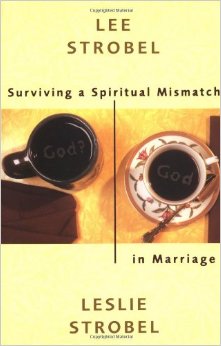
MismatchBecause I recognize that some of you are facing this challenge as a daily reality, I close with the suggestion of a book that you may find helpful.  Lee and Leslie Strobel’s Surviving a Spiritual Mismatch in Marriage has been valued highly by those who wish to remain faithful to God (and teaching their children to do the same) when their partner simply does not share this faith.


Discipline and Learning (Hebrews 12:3-13)

No one likes being told what to do.  It’s my life, after all.  Personally I’m profoundly passive aggressive in this area.  I mean, I don’t even like it when Netflix recommends movies I should watch.  In school, the surest way to get me to lose interest in reading anything was to assign it for class. It could have been the greatest book ever written—like, The Illustrated Guide to Fireworks, Candy, and Puppies—but as soon as I realize I have to read it I lose all interest.

It’s one thing when these things are to our obvious benefit.  It’s another thing when we’re asked to live contrary to what our society dictates.  That was the situation in the first century.  The writer of the letter to the Hebrews was pleading with his fellow Jesus-followers to hang on—to endure the pressures of a society that saw Christianity as a source of shame, not honor.

So while Hebrews 12:1-3 had used the image of a distance runner to illustrate the need for endurance, the writer now switches things up a bit, moving from the imagery of an athlete to a student.

He starts by shaming them just a bit—reminding them that their current suffering can’t be compared to what Jesus endured on the cross:

In your struggle against sin you have not yet resisted to the point of shedding your blood.  (Hebrews 12:4)

Now, from a purely historical point of view, this is quite helpful—it tells us that the letter was written before the Christian persecution rose to a crescendo.  And this also means that while yes, some early peoples had witnessed displacement and the loss of material property (recall that at one point in the first century, Jews had basically been evicted by the Roman government), this was nothing compared to the actual shedding of blood.  In a way, their persecution was cause for joy—not sorrow.

The writer then moves directly into his central argument.  In this next section, pay close attention to a word that he repeats in nearly every sentence (we’ll highlight it in bold to make it easier):

5 And have you forgotten the exhortation that addresses you as sons?

“My son, do not regard lightly the discipline of the Lord,

nor be weary when reproved by him.

6  For the Lord disciplines the one he loves,

and chastises every son whom he receives.”

7 It is for discipline that you have to endure.  God is treating you as sons. For what son is there whom his father does not discipline? 8 If you are left without discipline, in which all have participated, then you are illegitimate children and not sons. 9 Besides this, we have had earthly fathers who disciplined us and we respected them. Shall we not much more be subject to the Father of spirits land live? 10 For they disciplined us for a short time as it seemed best to them, but he disciplines us for our good, that we may share his holiness. 11 For the moment all discipline seems painful rather than pleasant, but later it yields the peaceful fruit of righteousness to those who have been trained by it. (Hebrews 12:5-11)

Discipline.  The Greek root is paidea—if you’re a teacher, you might recognize it as the root of the word pedagogy, referring to the methods of teaching.  If you trace it’s meaning over time, you see a clear evolution in the way “discipline” was understood.

For the Greeks, the term related to intellectual instruction—primarily of young men.  The ancient Jews (during the time of the Old Testament) saw “discipline” as related to a person’s moral development—such as when Proverbs 1:7 emphasizes “wisdom and discipline,” and a “wholesome discipline” that is related to a person’s “integrity.”  By the time of the first century, the Jews’ many years of struggle led them to connect God’s “discipline” with their own suffering—a writing from the years shortly before Jesus said that “[God’s] discipline consists in fire and pain” (Shadrach Apc. 4:1).

So when the writer quotes from Deuteronomy’s lessons on discipline (Hebrews 12:5b-6, above), what is he saying?  He’s telling his readers: if you think your current struggle is arbitrary, you have it all wrong.  Don’t merely endure this—learn from it.

If you’ve ever been skeptical about religious belief, passages like this must surely throw you for a loop.  Religion is man-made, we’re repeatedly told; but who would make up a God like this?  A “Santa Claus” God who gives me what I want—that makes sense.  But a God who disciplines?  Who allows me to become wounded?  Who would want that?

Sigmund Freud thought he knew the answer.  Though much of his ideas have now been lost (or rejected), Freud gave the world permission to understand the human soul without God’s help.  Freud believed that religion provided a way to help us cope with immoral behavior and guilt.  Freud essentially said that when thinking about morals, the human mind could be split into two categories: (1) conscience (“Don’t do that!”) and (2) guilt (“I can’t believe I did that!”).  If I violate my conscience by doing something immoral, then I feel guilty.  But if I am punished, my guilt is relieved (think about the Dobby effect we learned about earlier in this series—where people feel less guilty if they experience pain or displeasure).  So if I want to justify my wrong behavior, all I need to do is accept my punishment.  Religious “penance” becomes the cost of doing business.  Did you see the movie The Godfather?  Remember the final scene?  The Godfather is in church, taking communion.  But the director splices in scenes from the streets, where the Godfather’s hired guns are committing heinous crimes.  Freud never saw the movie, but if he did, he’d say: See?  Religion can be a powerful way of justifying the most heinous things imaginable.  In other words, there are times when yes, I want a God who punishes me, because this punishment liberates me to act immorally as long as my crime brings more pleasure than my punishment brings pain.  Freud would see this as a great irony: the punishment designed to correct behavior ends up enabling it.

If Christianity were any other religion, we might need to concede this point.  Karma makes more sense than grace.  But Christianity offers a different message altogether.  And the cross scandalizes the extremes at both ends.  The cross defies my desire to see God only as a cosmic Santa Claus with a bag full of blessings; the cross challenges me to see God’s punishment resting on the shoulders of Jesus.

At the cross, Jesus absorbed the wounds of God’s anger so that we could absorb the wounds of God’s mercy.  Both are forms of God’s justice—it’s just that while Jesus absorbed God’s retributive justice we experience God’s restorative justice.  I don’t know if I can always draw a straight line between suffering and God’s restorative discipline.  What I do know is that our every human experience—even the ones that seem “painful” not “pleasant” can be opportunities for learning and spiritual growth.

The writer of Hebrews concludes that there is nothing more empowering than self-forgetfulness:

12 Therefore lift your drooping hands and strengthen your weak knees, 13 and make straight paths for your feet, so that what is lame may not be put out of joint but rather be healed. (Hebrews 12:12-13)

Are you going through a rough season?  A hard time at work?  Problems in a relationship?  Don’t waste your suffering.  Don’t waste your childlessness, don’t waste your heartbreak, don’t waste your grief.  Instead, allow God to use even the harshest of seasons to sharpen you and strengthen you into a better agent of his kingdom.


Good Fridays, Unintentional Sins, and Cussing Pastors (or: “You had ONE job!”) (Hebrews 9:23-28)-

Let’s all collectively agree that this kind of thing could only happen to me.

If you missed our worship service last Sunday morning, then let me fill you in on what happened.  And even if you made it to our morning service, let me try and clarify what happened.  We were working our way through Hebrews 9—just as we’ve done this week.   When speaking of atonement, I was using the terms “shame,” “sin,” and “guilt” essentially interchangeably.  Except at one point all three words attempted—of their own free will, it seems, so I can hardly be blamed—to come out of my mouth at once.  But of course, they couldn’t have merged into some random, culturally-neutral word like “walrus” or “megaphone.”  Oh, no.  Instead, I ended up saying something that most people heard as an expletive.  To quote Jerry Seinfeld: “You were like a Red Fox record.”

In the moment, the internal dialogue that always runs in my head kicked into overdrive.  So I kept going—not because of any conscious choice, but because I literally couldn’t process the sheer number of things going through my mind (including abject horror).

So let’s you and I be clear: it wasn’t intentional.  I know, I know; everyone told me that “the word” fit the context perfectly well.  But trust me; that was never in the manuscript.  And even though Paul uses its Greek equivalent (which we usually translate as “rubbish” or some less-edgy word in our English Bibles) in Philippians 3:8, I tend to think this is one of those cases where shock value loses its effectiveness when shock exceeds the value.

So if you were there—or even if you weren’t there—and you find this sort of language offensive, I truly am sorry.  And if you were hoping this was some new turning direction toward a more in-your-face style of ministry, then I’m sorry to disappoint.  I won’t pretend to never using harsh language, but I’d generally prefer to avoid the label of the “cussing pastor,” thank you very much.

Honestly, the biggest thing—at least for me—was the fact that the whole morning felt tainted.  Sure, people know me for my sarcastic jokes and the bizarre combination of pseudo-intellectual and aging punk-rocker.  But preaching is…well…it’s really kind of doing what John the Baptist once said of himself and Jesus: “He must increase,” he said, “and I must decrease” (John 3:30).

You had ONE job.

One job: to exalt Christ and try not to get in the way.  One job: to communicate clearly so that others might have their minds sharpened and hearts softened by the gospel.  One job, and with one word I felt I’d managed to divert focus away from Jesus and onto myself.

Sure, we all have bad days.  But chances are when you have a bad day at work it doesn’t go on Youtube.  I laughed about it later, but you might imagine how this sort of thing tends to eat at you if you let it.  Because I found myself thinking later about just how much this dovetails with the whole concept of guilt and shame—even that whole thing called the “Dobby Effect” we looked at earlier.  See, I wasn’t bothered because people yelled at me—because nobody did.  I was almost bothered because everybody found it so funny.

Why?

And here’s what God showed me: that in that moment my Savior wasn’t Jesus but my own performance record.    That’s wrong, and that’s toxic.

Had I thought fast enough, I’d have diverted our attention to Hebrews 9:7, which speaks of “unintentional sins.”  Yes, sin can be deliberate, but sin can also include the things we do by accident or drift into when our eyes stray from God.  All of us do it.  No one drifts into holiness.  Our natural inclination is toward self-interest.  I realize now that my “unintentional sin” wasn’t being a “cussing pastor,” but my ongoing temptation to bow down to an idol of performance.

And to think: this all began when our ancestors decided to bite into the lie that eating the forbidden fruit would make them “like God.”  Man had ONE job.  And he blew it.  And so did we.

Thankfully, God’s ultimate plan was for transformation and healing.  What began in a garden defiled would be made whole in a garden restored (Revelation 21-22).  Israel’s temple symbolized this hope, though as the writer of Hebrews reminds us, this hope is ultimately—and only—embodied in Jesus:

23 Thus it was necessary for the copies of the heavenly things to be purified with these rites, but the heavenly things themselves with better sacrifices than these. 24 For Christ has entered, not into holy places made with hands, which are copies of the true things, but into heaven itself, now to appear in the presence of God on our behalf. 25 Nor was it to offer himself repeatedly, as the high priest enters the holy places every year with blood not his own, 26 for then he would have had to suffer repeatedly since the foundation of the world. But as it is, he has appeared once for all at the end of the ages to put away sin by the sacrifice of himself. 27 And just as it is appointed for man to die once, and after that comes judgment, 28 so Christ, having been offered once to bear the sins of many, will appear a second time, not to deal with sin but to save those who are eagerly waiting for him. (Hebrews 9:23-28)

Do you understand what the writer is saying?  It’s easy for human priests to enter earthly temples.  Jesus went into heaven itself.  He stood before God to intercede for you and me.  The judgment we rightly deserve for sin—intentional or unintentional—fell on the Savior’s shoulders, so that you and I might be clothed in Christ’s righteousness.

That’s what Good Friday is fundamentally about.  It’s the day we observe and remember the sacrifice of Christ.  The day that he hung from a scandalous piece of wood, the day when a curtain of darkness hung over the sky, and the rain pelted the earth like God’s own sorrow.  One of my favorite sermon quotes from Tim Keller focuses on the contrast between the first Adam and Jesus:

“In the Garden, Adam was told, ‘Obey me about the tree—do not eat from the tree of the knowledge of good and evil, or you will die.’…God said to Jesus, ‘Obey me about the tree’—only this time the tree was a cross—‘and you will die.’ And Jesus did.”  (Timothy Keller, King’s Cross, pp. 10-13).

Jesus had ONE job.  And he succeeded where everyone else only failed—though it literally cost him his life.  Because of this sacrifice, when he entered the heavenly places, his perfect record of obedience got “transferred” or “credited” to our account.   What’s that do for us?  Well, for one thing, it destroys pride.  Pride can laugh at others—in fact it excels at it.  But pride can never laugh at itself—in fact to do so is to destroy it.

Not all our failings are laughing matters.  But this Good Friday I am thankful for a church family that responded to their cussing pastor by responding with grace and understanding rather than offense and condemnation.  And I am hopeful that we see God’s grace in action—that our dependence would be on “the old rugged cross,” a far more stable source of comfort and security than our frail reputations.

Are you a bit of a screw-up?  That’s ok; I’ve been there.  Probably will be again.  So let’s you and I trust Jesus together.

He’s the One who does His job.