Persecution of Israel – Some Things Never Change (Psalm 129)

I am going to be really honest with you here and hope you find it encouraging. I read through this Psalm today and thought to myself, “What am I going to write about that? I barely know what it is talking about.” I had to research this one a bit.

First of all, the superscription says that it is “A song of ascents.” This refers to the Psalms from 120 through 134 that were sung by pilgrim worshippers as they came to Jerusalem for various feasts (ascending to the city which sits high from any direction and approach).view-of-jerusalem-007

In broad terms there are two main ideas: First, the writer declares that God has saved Israel from various oppressors, and secondly, he prays that those who persecuted the nation would be put to shame.

Let’s look at the first section:

Psalm 129

A song of ascents.

1 “They have greatly oppressed me from my youth,” let Israel say;
2 “they have greatly oppressed me from my youth, but they have not gained the victory over me.
3 Plowmen have plowed my back and made their furrows long.
4 But the Lord is righteous; he has cut me free from the cords of the wicked.”

There are some people that I know who have had sorrows and challenges throughout their lives. And Israel as a nation is personified in the opening verses in such a way. There was never a time where they were not pursued and afflicted by nations around them. From the exodus out of Egypt, to the conquest of the Promised Land, to the ongoing battles with the Philistines and all the “-ites” around them … Israel was continuously pressed. BUT, God had not allowed any of those nations to fully conquer them or have a victory over them.

The picture in verses three and four appears to be of a person who has been flogged with cords upon the back … a person who has been beaten and scourged, but not killed. And indeed, the righteous God had set them free from this ill treatment.

And now comes a prayer …

5 May all who hate Zion be turned back in shame.
6 May they be like grass on the roof, which withers before it can grow;
7 a reaper cannot fill his hands with it, nor one who gathers fill his arms.
8 May those who pass by not say to them, “The blessing of the Lord be on you; we bless you in the name of the Lord.”

The writer asks God (verse 5) to turn to shame all those who hate Zion – the city of God.

The visual in verses 6-7 is a picture as to how seeds blown through the air would find root and begin to grow on the roofs of ancient houses. However, in this setting there would be no depth of soil and the plant would wither and die before it was of any value for reaping. And so the prayer was that those who hated Zion would find that their efforts were short-lived and fruitless.

The final verse speaks of how those who hate Zion and the Lord’s people were not worthy of the customary greeting of a blessing upon them in the name of the Lord. In Eastern cultures, even to this day, it is rather rude to not greet someone with a blessing; but these enemies deserved to be ignored because of their hatred.

By way of application for us today, there is the broad, overarching truth that God is faithful to His own people in any era or dispensation; and God will not allow injustice to prevail ultimately. Though there may be suffering along the way, in the end God and His people triumph.

But beyond this, the reading and understanding of this Psalm makes me reflect upon much that is happening in the geo-political world today. Israel has been much in the news in the past week, often being condemned and criticized for their aggressive responses to attacks upon the Jewish State.

I believe that an accurate understanding of the Scriptures teaches that God has a future for the nation of Israel in the end times. As a country and a people, there is nothing like it in all the world in terms of endurance over centuries and millennia. Other nations and ethnicities have come and gone, but Israel remains, and so it shall because of God’s promises that date back to even Abraham—4,000 years ago.

A prominent American figure in political dialogue (who shares our biblical worldview and Scriptural interpretation) spoke of the difficulties facing Israel, saying this past week:

This week, Israel finally had enough of the terrorist strikes against their civilian population and launched a ground campaign into Gaza, the hell hole of Hamas. Twice Hamas violated a cease fire agreement and continued to launch rockets over 80% of the Israeli population. …  Hamas is a terrorist organization, not a legitimate government.

Israeli PM Netanyahu bluntly explained the difference between the so-called “2 sides.” It is indeed a tragedy that several hundred residents of Gaza have been killed. It’s an even greater tragedy that the savages who operate Hamas use innocent people as human shields to protect their weapons. None of those Palestinians would have died if Hamas didn’t insist on acting like vicious mad dogs intent on making mayhem.

And please don’t buy the lie that if Israel would give up some more land, it would be okay. Israel lives on 1/6 of 1% of the amount of land possessed by Arabs and Muslims. There are 300 million Middle Eastern Muslims and Arabs to only 5.5 million Israeli Jews. The idiotic proposal to give away more Israeli land is to assume that if you let the mad dog get closer to your face, the less likely they are to bite.

Israel has a legitimate right to the land and a legitimate right to defend itself. It is the only Middle Eastern country that gives women full rights; the only one who outlaws honor killings of women; it’s built 6 universities, 20 community colleges, and 166 clinics for Palestinians between 1979 and 2006. Israel accommodates 15 different religions. How many Christians, Hindus, or Buddhists are free to worship in Pakistan, Iran or Iraq, Saudi Arabia or Gaza?

The entire content of this piece may be found HERE.

God’s people in the world – be it his covenant people, or the people of the new covenant – are going to be hated and persecuted. But God will never allow evil to prevail in the end.

The Rejected Stone (Psalm 118)

Let’s play an association game. I will mention an occasion, and you quickly think about what song/hymn immediately comes to mind. First – Christmas Eve. Secondly – Easter Sunday. Third – Thanksgiving Day.

The first is the easiest. I will bet that almost all of you answered “Silent Night.” For Easter Sunday there are maybe a couple tunes, though I would think that “Christ the Lord is Risen Today” would be a most common answer. For Thanksgiving it might be “Come, Ye Thankful People Come,” or possibly “We Gather Together.”

We immediately associate certain songs with specific events. And Psalm 118 was like that for the Jewish people. It is the final of the Hallel Psalms – those from 113-118. These were Psalms sung at the great annual festivals in Israel – Passover, Pentecost, and Tabernacles. During the Passover celebration, Psalms 113-114 would be sung before the meal, with 115-118 after it. You may recall how Jesus and the Disciples sang a hymn at the last supper in the upper room before going out, and it was probably this Psalm 118.

As a musician, I would really like to have heard what the melody sounded like. There are a variety of themes and cadences of style in the Psalm. It would seem to me that it would have required quite a variety to make the words, themes, and moods work out.

The opening verses have a repetition and theme on the steadfast love of God, that returns at the end. There are sections that speak of God’s victory for the nation over all the nations – quoting even from the Exodus. And there are passages that are familiar to us from our knowledge of the New Testament. Verse 26 – “Blessed is he who comes in the name of the Lord” was of course being sung by the throngs of people upon the occasion of the entry of Christ into Jerusalem.

But let me single out one other phrase that is quoted in all four gospels as well as in Acts. And that is from verse 22 – “The stone the builders rejected has become the cornerstone.”  Jesus is recorded in each gospel account as asking, “Have you never read in the Scriptures: ‘The stone the builders rejected has become the cornerstone; the Lord has done this, and it is marvelous in our eyes’?”  Matthew 21:42

The illustration is of the construction of a stone building. The stone masons likely have a wide variety of raw materials around them to choose from, particularly for selecting the most important stone of all—the cornerstone. And when it is all finished, there would still be stones laying around that were not included in the structure… they were rejected.

The point of the illustration is that the Jewish leaders (as the stone masons) rejected the most important stone (Christ), but that God had rectified the situation by exalting Jesus to his proper position as the foundation of God’s house. And this is the message being delivered soon after the resurrection and in the early days of the church by Peter and John before the Jewish council (Acts 4:10-12)…

“Let it be known to all of you and to all the people of Israel, that by the name of Jesus Christ the Nazarene, whom you crucified, whom God raised from the dead–by this name this man stands here before you in good health. ‘He is the stone which was rejected by you, the builders, but which became the chief corner stone.’ And there is salvation in no one else; for there is no other name under heaven that has been given among men by which we must be saved.”

As we know all too well from our culture and world today, Jesus is rejected. Christians this day will give their lives in places like Iraq and other countries around the world, and there is little outcry against this. Faith will again today be mocked in our own country.

But there is no salvation in any other name or belief. The song says so; the song is God’s Word … from His playlist.

Psalm 118

1 Give thanks to the Lord, for he is good; his love endures forever.

2 Let Israel say: “His love endures forever.”
3 Let the house of Aaron say: “His love endures forever.”
4 Let those who fear the Lord say: “His love endures forever.”

5 When hard pressed, I cried to the Lord; he brought me into a spacious place.
6 The Lord is with me; I will not be afraid. What can mere mortals do to me?
7 The Lord is with me; he is my helper. I look in triumph on my enemies.

8 It is better to take refuge in the Lord than to trust in humans.
9 It is better to take refuge in the Lord than to trust in princes.
10 All the nations surrounded me, but in the name of the Lord I cut them down.
11 They surrounded me on every side, but in the name of the Lord I cut them down.
12 They swarmed around me like bees, but they were consumed as quickly as burning thorns;
in the name of the Lord I cut them down.
13 I was pushed back and about to fall, but the Lord helped me.
14 The Lord is my strength and my defense; he has become my salvation.

15 Shouts of joy and victory resound in the tents of the righteous: “The Lord’s right hand has done mighty things!
16 The Lord’s right hand is lifted high; the Lord’s right hand has done mighty things!”
17 I will not die but live, and will proclaim what the Lord has done.
18 The Lord has chastened me severely, but he has not given me over to death.
19 Open for me the gates of the righteous; I will enter and give thanks to the Lord.
20 This is the gate of the Lord through which the righteous may enter.
21 I will give you thanks, for you answered me; you have become my salvation.

22 The stone the builders rejected has become the cornerstone;
23 the Lord has done this, and it is marvelous in our eyes.
24 The Lord has done it this very day; let us rejoice today and be glad.

25 Lord, save us! Lord, grant us success!

26 Blessed is he who comes in the name of the Lord. From the house of the Lord we bless you.
27 The Lord is God, and he has made his light shine on us. With boughs in hand, join in the festal procession up to the horns of the altar.

28 You are my God, and I will praise you; you are my God, and I will exalt you.

29 Give thanks to the Lord, for he is good; his love endures forever.

Let Me Tell You What God Has Done For Me! (Psalm 66)

I would certainly think that most of you have seen the commercial that has been on for quite a number of years now that features a guy who is really excited about his new basement. He is so happy that he attempts to get a whole variety of people to look at it – beginning with the mailman, then with a woman named “Jill” who is jogging down the street, and finally with his next door neighbor as they are both cutting grass on riding mowers.

The writer in Psalm 66 that we look at today sort of reminds of this commercial guy in terms of his enthusiasm. The Psalmist wants everyone to see and hear how great God has been and how thankful the writer is for the deliverance and subsequent blessings he has received.

Verses 1-12 talk about God’s goodness to the nation, and then verses 13-20 turn to a personal expression of thanksgiving and praise.

As we have seen in our devotional series over and over, the big event in Israel’s history that spoke of the power of God over the nations was the deliverance of the Israelites from their bondage in Egypt. And especially recalled from that event was the opening of the sea in order that the nation may pass through.

If you were from another nation at that time, and you heard and knew of this sort of power of the God of Israel, it was a frightening prospect to come up against these people. And the writer says that the nations should indeed (as in verse 3) “cringe” before God and acknowledge his grandeur.

But God’s love and care for the nation was not limited to just doing great things for Israel because of his covenant love, God also disciplined them upon their times of failure to trust and obey. But in the end, he was always faithful, and the writer was excited to talk about what could be seen in that history and relationship between the Lord and his chosen people.

But the Psalm takes a turn at verse 13 and become more reflexive and personal, as the writer recalls an event (specifically unknown) where he was in a very bad place. He cried to the Lord in that condition and made vows as to what he would do upon his rescue.

And sure enough, God was faithful and came through for the writer; and in response, he was going to fulfill his vows. In fact, he essentially says that even if he were to offer every type of animal commonly used in the sacrificial system, it would still be insufficient to express his gratitude and praise.

So are you thankful and excited about anything good that God has done in your life? Do you really desire everyone around you to know how God has blessed you and helped you through some difficulty or severe problem? I am pretty sure it would not hurt us as a church to be a bit more expressive together about our thanksgiving and praise.

Psalm 66

For the director of music. A song. A psalm.

1 Shout for joy to God, all the earth!
2 Sing the glory of his name; make his praise glorious.
3 Say to God, “How awesome are your deeds! So great is your power that your enemies cringe before you.
4 All the earth bows down to you; they sing praise to you, they sing the praises of your name.”

5 Come and see what God has done, his awesome deeds for mankind!
6 He turned the sea into dry land, they passed through the waters on foot—come, let us rejoice in him.
7 He rules forever by his power, his eyes watch the nations—let not the rebellious rise up against him.

8 Praise our God, all peoples, let the sound of his praise be heard;
9 he has preserved our lives and kept our feet from slipping.
10 For you, God, tested us; you refined us like silver.
11 You brought us into prison and laid burdens on our backs.
12 You let people ride over our heads; we went through fire and water, but you brought us to a place of abundance.

13 I will come to your temple with burnt offerings and fulfill my vows to you—
14 vows my lips promised and my mouth spoke when I was in trouble.
15 I will sacrifice fat animals to you and an offering of rams; I will offer bulls and goats.

16 Come and hear, all you who fear God; let me tell you what he has done for me.
17 I cried out to him with my mouth; his praise was on my tongue.

18 If I had cherished sin in my heart, the Lord would not have listened;
19 but God has surely listened and has heard my prayer.
20 Praise be to God, who has not rejected my prayer or withheld his love from me!

Pursued and Depressed … but “I trust in the Lord” (Psalm 31)

Not many of us can relate to someone conspiring to take our life away from us. But this was a very real experience for the writer of our Psalm today. David had enemies that pursued him, threw swords at him, shot arrows to kill him, and otherwise conspired to put him into a premature grave.

I can only imagine how stressful and depressing it would be to know you have more than a few people who desire to see you assume room temperature. I doubt that the guards around King David were exactly any sort of equivalent to the modern-day U.S. Secret Service guarding the President and other important officials.

Again, remember that our summer study of God’s Playlist is a look into a songbook. And this song of thanksgiving is a tune about how the composer dealt with the stresses of being pursued and plotted against … he trusted ultimately in the Lord. Verses of this Psalm were familiar to, and quoted by, both Jonah and Jeremiah. And of course, we all are familiar with Jesus Christ uttering the words of verse five, “Into your hands I commit my spirit.”

In various genres of music, there are those songs that have a mellow verse or stanza that sings of a difficulty or pain, only to have the chorus brighten quickly into an upbeat tune which rejoices in a bigger perspective that makes everything alright. This Psalm 31 is of a similar construction. There are two verses/stanzas that speak of stress and the severity of problems (1-5; 9-13), only to be followed by two joyfully confident choruses (6-8; 14-24) with the key phrase, “But I trust in the Lord.”

No, we can’t relate in any personal way to people seeking our lives. But probably most all of us can relate to those times when during our work careers, conflicts and personalities, or a whole host of other troubling circumstances worked against us … resulting in people who conspired quietly (if not obviously) to put us in a bad light toward the goal of us being removed or replaced. Most of us can relate to times where by either evil intention or ignorant misunderstanding, others said and reported things about us that were not true. And maybe the most hurtful of all is to see people with whom we were very close at one time, when seeing us in the crosshairs and walking the plank, walk away from us with few words … they’re just gone and don’t want to be associated any longer. Ugh, that hurts.

David knew all of this is abundance. And likewise, when these cycles of life come around to us, we need to get to the same place and disposition as David. In difficult times, I have had to calm myself with these perspectives and words such as are in this song: “I will trust in you, my God” … “I know my times are in Your hands” … “I will run into the shelter of Your presence” … “I know You will preserve me if I am true to You.”

It really works.

Psalm 31

For the director of music. A psalm of David.

1 In you, Lord, I have taken refuge; let me never be put to shame; deliver me in your righteousness.
2 Turn your ear to me, come quickly to my rescue; be my rock of refuge, a strong fortress to save me.
3 Since you are my rock and my fortress, for the sake of your name lead and guide me.
4 Keep me free from the trap that is set for me, for you are my refuge.
5 Into your hands I commit my spirit; deliver me, Lord, my faithful God.

6 I hate those who cling to worthless idols; as for me, I trust in the Lord.
7 I will be glad and rejoice in your love, for you saw my affliction and knew the anguish of my soul.
8 You have not given me into the hands of the enemy but have set my feet in a spacious place.

9 Be merciful to me, Lord, for I am in distress; my eyes grow weak with sorrow, my soul and body with grief.
10 My life is consumed by anguish and my years by groaning; my strength fails because of my affliction, and my bones grow weak.
11 Because of all my enemies, I am the utter contempt of my neighbors
and an object of dread to my closest friends—those who see me on the street flee from me.
12 I am forgotten as though I were dead; I have become like broken pottery.
13 For I hear many whispering, “Terror on every side!”  They conspire against me and plot to take my life.

14 But I trust in you, Lord; I say, “You are my God.”
15 My times are in your hands; deliver me from the hands of my enemies, from those who pursue me.
16 Let your face shine on your servant; save me in your unfailing love.
17 Let me not be put to shame, Lord, for I have cried out to you; but let the wicked be put to shame and be silent in the realm of the dead.
18 Let their lying lips be silenced, for with pride and contempt they speak arrogantly against the righteous.

19 How abundant are the good things that you have stored up for those who fear you, that you bestow in the sight of all, on those who take refuge in you.
20 In the shelter of your presence you hide them from all human intrigues; you keep them safe in your dwelling from accusing tongues.

21 Praise be to the Lord, for he showed me the wonders of his love when I was in a city under siege.
22 In my alarm I said, “I am cut off from your sight!”  Yet you heard my cry for mercy when I called to you for help.

23 Love the Lord, all his faithful people! The Lord preserves those who are true to him, but the proud he pays back in full.
24 Be strong and take heart, all you who hope in the Lord.

The Heavy Weight of Thanksgiving Compared to All Else (Psalm 30)

Today we begin to look at a series of Psalms of Thanksgiving. These are songs of gratitude by worshippers who are thankful for one of a variety of answers to prayer for deliverance, victory, restoration, healing, etc.

In America, we have come to have a traditional day set aside to ponder that for which we have to be thankful. This originated from a series of these days that were set aside during the Civil War. Imagine that – in the midst of the most grueling time in our nation’s history, there was a sense of need to express gratitude to God.

We may not always feel that our circumstances lead toward much of an attitude for thanks, as in the midst of pain and suffering our minds are turned away from that which we possess as God’s blessings and grace. But when objectively measured, away from the immediate context of pain, the scales will always show that the blessings outweigh the sorrows.

Really? How can that be? There are people—even those who name the Lord—who seem to suffer pain upon pain.

Life itself is a blessing. God could have justly judged our original parents in the Garden and none of us would have ever existed. Our very lives are due to God’s grace. Beyond that, on the other end of life, we have the great and sure promise of the redemption of our earthly bodies for an eternal one that shall live forever in God’s presence. So, how many sorrows does it take to outweigh these truths?

God has blessed us all, and when we acknowledge such, we in turn bless God. And that is easy to understand and imagine. He delights in our gratitude and praise.

I’ll let the guilty go nameless here, relative to which of my five boys I’m speaking of … and at this point, this is a humorous family story. This particular child on one of his birthdays—I would guess around age six or seven—was opening his presents. He quickly went from one to another and seemed displeased, disappointed, and bored with what he was getting. The attitude was so bad that we took his presents away from him at the end of the day, and he didn’t get them back until Christmas! It was a lesson learned.

Another of our boys was always so excited and thankful about anything that we gave him. He saw nothing but the good in it and could not contain his excitement and gratitude—which overflowed out of him with smiles, hugs, and thanks. I remember one time when seeking out a possible medical remedy for a problem he was facing, the doctor asked the question, “What do you most like about this boy?” And without any hesitation my wife and I were able to immediately answer about what a wonderful attitude of gratitude he had about anything given him or done for him.

If we as earthly parents were annoyed on one occasion but blessed on the other, how much more would God not be likewise in light of His incredible and abundant grace in our lives?

And this is the picture we see today in Psalm 30. We see a song of David where he reflects upon tough times and God’s deliverance. Though there was difficulty—even God’s anger and discipline—the grace and mercy of God far outweighed it. God’s blessings were bigger and better than the pain.

David expresses in this Psalm that his deliverance had the benefit that he could again be a worshipper of God who expresses his gratitude for others to hear.

I doubt that my life is too very different from most of you. I would think that, like me, you all can recall some occasions in your life where a set of circumstances or events could have led to your demise. But God delivered you, and it gives you a sense of renewed gratitude for that salvation.Logan Circle

In college, I was one day out for a long run with some other athletes through the city of Philadelphia, and we were almost back at the school—crossing the Benjamin Franklin Parkway at Logan Circle, if you know the city (picture the movie “Rocky”). The traffic there goes clockwise around a circle, and not thinking clearly of that pattern, I instinctively looked to the left from which, of course, nothing was coming. Not thinking and not looking to the right, I stepped off the curb in front of a SEPTA city transit bus going clockwise around the circle. One of the others grabbed my hood and pulled me back just in time. It was a very close call.septa bus

Just less than a year ago, my pulmonary emboli could have had a terminal result. About 20% do not survive what happened that evening. I did not even know I was in a dangerous health situation until it was all over and I was told how God was good to me!

Those are just two examples. There have been others; there have been some I likely don’t even know about how God delivered.

And though I have some complaints, irritations, fears, feelings of injustice, etc., I do understand (though not every moment of every day!) that my reasons for gratitude far outweigh any of these bumps and bruises upon the highway of life.

Psalm 30

A psalm. A song. For the dedication of the temple. Of David.

1 I will exalt you, Lord, for you lifted me out of the depths and did not let my enemies gloat over me.
2 Lord my God, I called to you for help, and you healed me.
3 You, Lord, brought me up from the realm of the dead; you spared me from going down to the pit.

4 Sing the praises of the Lord, you his faithful people; praise his holy name.
5 For his anger lasts only a moment, but his favor lasts a lifetime; weeping may stay for the night, but rejoicing comes in the morning.

6 When I felt secure, I said, “I will never be shaken.”
7 Lord, when you favored me, you made my royal mountain stand firm; but when you hid your face, I was dismayed.

8 To you, Lord, I called; to the Lord I cried for mercy:
9 “What is gained if I am silenced, if I go down to the pit? Will the dust praise you? Will it proclaim your faithfulness?
10 Hear, Lord, and be merciful to me; Lord, be my help.”

11 You turned my wailing into dancing; you removed my sackcloth and clothed me with joy,
12 that my heart may sing your praises and not be silent. Lord my God, I will praise you forever.

Trust, Disability, and the Cult of Normalcy (Psalm 115)

I currently know several young couples who are expecting a child.  For some it’s their very first—for others, the latest model in the assembly line.  While some prefer to know the sex, others prefer the element of surprise.  But all of them say essentially the same thing: “As long as it’s healthy.”

But there are countless young couples whose children don’t fit traditional definitions of “healthy.”  Autism, Down’s syndrome, Sickle Cell anemia—these represent just a few conditions that one can be born into, and endure a lifetime.

Today we’re talking about how to trust God when confronted with the reality of disability and illness.  This subject, of course, extends beyond the boundaries of childbirth, but into the various infirmities that come our way—whether it be cancer, disease, or debilitating forms of depression.  While there may be seasons of life that bring more suffering than others, what holds the above conditions together is their durative character, their tendency to not shape not just our lives, but those around us.

Mind you, I write this as a 30-something single man; I’ve never really endured life with an autistic son or daughter, never directly faced any long-term illness.  But I also know that the Bible makes no promises of smooth sailing for any of us—the book of Ecclesiastes ends with the author admitting that at his age, he often wakes up wishing he hadn’t.  Live long enough, and you’ll feel the same.

All the more frustrating is the sense that no one understands.  Other parents with their (ahem) “normal” children could never understand the nuances of dealing with a son or daughter with disability.  No one could understand how daily rituals become battlegrounds when fighting cancer, disease, or depression.  And although we worship a powerful God, it’s actually relatively rare that He would reverse these infirmities.

TO YOUR NAME

Psalm 115 is what’s known as a “communal trust psalm,” meaning it moves from an individual psalm of trust to a community’s promise to trust in God.  The original author is unknown, as is its circumstance.  But perhaps that helps its message seem all the more timeless.

The psalm opens with familiar words:

Not to us, O Lord, not to us, but to your name give glory, for the sake of your steadfast love and your faithfulness!

In his commentary on psalms, Derek Kidner lists the many historic individuals who quoted these lines following a personal victory—such as William Wilberforce when the bill passed abolishing the slave trade.  What is “glory?”  If you recall from a previous post, the word “glory” comes from a Hebrew word meaning “weight” or “significance.”  To give God glory means to reveal His significance—even in times of difficulty.  This is why Pastor John Piper could write a popular article called “Don’t waste your cancer.”  Why?  Because if our goal is joy and not merely earthly happiness, then even disability, disease, and death can be opportunities to reveal God’s significance.

IDOLATRY OF NORMALCY

The next verses deal with the reaction of others to the same situation:

Why should the nations say,  “Where is their God?”

Our God is in the heavens; he does all that he pleases.

Their idols are silver and gold, the work of human hands.

They have mouths,  but do not speak; eyes, but do not see.

They have ears, but do not hear; noses, but do not smell.

They have hands, but do not feel; feet, but do not walk; and they do not make a sound in their throat.

Those who make them become like them; so do all who trust in them.

In Israel’s day, the nation turned to the makeshift gods of other religions as a source of comfort and protection.  But while the idols may look different, we are just as guilty.  An “idol” is anything you look to for security, comfort, and protection apart from God.  And when confronted with disability and disease, it’s only natural to look with longing eyes at images of “health” and “normalcy.”  In a famous article “Idols of the Heart and Vanity Fair,” David Powlison observes that the surest indicator is the way that our emotions become entangled with these idols.  Lust, yearning, fear of losing control—these are all examples of hidden idolatry.  Mind you, we need not heap more grief and blame on those struggling to deal with situations of disability; all of us are guilty of this at some point or another.  But my larger point is that our world largely places enormous value on being “normal.”

In an article for the Baylor University ethics journal, Thomas E. Reynolds writes of what he calls the “cult of normalcy.”  According to Reynolds, the cult of normalcy arises when we see a healthy, able-bodied individual, and assume that all people should possess the same faculties.  But we know from experience that this is not so.  And, ironically, in a society that values “tolerance” and the embracing of “diversity,” we have little room for those who deviate from social or medical norms.  So much so that it’s not unusual for parents to be pressured to terminate their pregnancies if prenatal screenings reveal such things as Down’s syndrome.  But Reynolds writes:

“Against the cult of normalcy, disability foregrounds vulnerability as a fundamental condition of sharing life together.  It reminds us that wholeness is not self-sufficiency, but the genuine communion that results from sharing our vulnerable humanity with one another in light of God’s grace.”  (Thomas E. Reynolds, “The Cult of Normalcy”)

Therefore to repent of the idol of normalcy means recognizing the ways that God remains at work even in a life that has been so radically altered.

OUR HELP AND SHIELD

The psalm returns focus to God:

Israel, trust in the Lord! He is their help and their shield.

10 house of Aaron, trust in the Lord! He is their help and their shield.

11  You who fear the Lord, trust in the Lord! He is their help and their shield.

12  The Lord has remembered us; he will bless us; he will bless the house of Israel; he will bless the house of Aaron; 13  he will bless those who fear the Lord, both the small and the great.

14  May the Lord give you increase, you and your children!

15  May you be blessed by the Lord, who made heaven and earth!

16  The heavens are the Lord‘s heavens, but the earth he has given to the children of man.

17 The dead do not praise the Lord, nor do any who go down into silence.

18  But we will bless the Lord from this time forth and forevermore. Praise the Lord!

In other words, the psalm hopes that God would exchange suffering for blessing.  Granted, we are never actually promised lives of blessing, but the larger point is that God can be counted on in times of great grief.

In the gospel of John, Jesus’ close friend Lazarus dies.  When Jesus arrives at his home, He is greeted by throngs of mourners, and even some individuals who blame Jesus for Lazarus’ death: “if you had been here,” Lazarus’ sister said, “my brother would not have died.”  But Jesus, His eyes brimming with tears, surveys the scene only to respond: “I am the resurrection and the life.  Whoever believes in me, though he die, yet shall he live.”  And Jesus proves His point by bringing Lazarus back from the dead.

What’s happening here?  It’s easy to get distracted by the “creatureliness” of the human condition.  Friends and loved ones may furrow their brows at the outbursts of an autistic child, or the webbing of tubes and wires that monitor and sustain a loved one while in the oncology ward.  Survivors may live with a complex regimen of medication that they live with the rest of their natural life.  Jesus is saying—then and now—You’re focusing on all the wrong things.  Don’t look at those things; look at me.  You want life?  I am life.  You want health restored?  I am the resurrection. 

And the most miraculous thing of all is that through Jesus, God entered into the human story so that He could identify with our every struggle, to die a death that we deserved, and then rise to life again to show us that there is a brighter future regardless of our present.  And so we can sing a song of trust—not because we sugar-coat the cares of our present, but because we know that they point us toward something greater to come.

Come quickly, Lord Jesus.

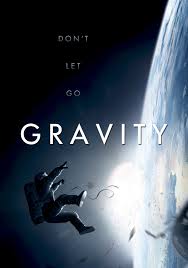
Falling Towards Heaven: Trust and 2013’s ‘Gravity’ (Psalm 62)

gravity posterSpace.  It spreads across the night sky like silken drapery, but scientists and astronomers tell us that it stretches out to infinity.  There, in the cold and the dark all our “wheres” and our “whys” vanish in a silence that yawns before us like an endlessly open grave.

In 2013 the science fiction thriller Gravity captured a nation’s attention—garnering seven academy awards.   The film centers on Ryan—an astronaut played by Sandra Bullock.  A cataclysmic accident leaves her stranded above the earth with little to no hope of rescue.

But when I watched the movie for the first time (no spoilers below; I promise), I was surprised to find that the film’s true conflict lay within.  You see, Ryan had been adrift for some time.  After the tragic death of her daughter, Ryan disconnected from life, preferring instead to stay in the car and drive for hours with no particular destination or purpose.

Through Ryan’s eyes, we see that space forms the perfect backdrop from man’s fragile condition.  From the moment we are born, we are set adrift—untethered from the cord that once offered both security and sustenance.  We grow older only to be repeatedly taught—by the greatest prophets of our age—that there is no up, no real “down.”  In a postmodern world, such absolutes are merely the by-products of our perception.  And so like Ryan, we are cut free.  Cut free to inhabit a world haunted by both the memory and uncertainty that lies on either side of the horizon.

gravity lullabyIn the film, Ryan makes contact with earth for the briefest of moments—but she manages only to contact a fisherman who speaks only Russian.  As the hopelessness of her plight settles on her shoulder like a burial shroud, she makes a moving confession:

“I’m gonna die…I know, we’re all gonna die. Everybody knows that. But I’m going to die today. Funny that… you know, to know. But the thing is, is that I’m still scared. Really scared. Nobody will mourn for me, no one will pray for my soul. Will you mourn for me? Will you say a prayer for me? Or is it too late… ah, I mean I’d say one for myself but I’ve never prayed in my life. Nobody ever taught me how… nobody ever taught me how…”

As her confession ends, the camera narrows its focus to a single tear that—in the absence of gravity—floats upward.

All tears fall towards heaven.  But, I suppose you already knew that.  If it’s true that “there are no atheists in foxholes,” then it stands to reason that the extremes of life—pain, fear, panic—finally lift our eyes above the horizon of self towards the sky.

Movies like Gravity grab our attention through their blockbuster effects; they hold our attention through their ability to accurately reflect the human heart.  Good art does this.  And in the book of psalms, we find art that predates Christ by nearly a millennium—yet speaks as powerfully to the human condition as ever.

MY SOUL WAITS IN SILENCE

In Psalm 62, David writes another “trust psalm.”  As with the other psalms of this type, we don’t know precisely what David was experiencing—though some commentaries suggest he wrote this psalm during a time of political upheaval started by a political/military rival named Absalom.

But like many other psalms of trust, this song helps us understand what it’s like to “wait in silence.”  Where is God?  Why continue to pray when we feel so terrifyingly alone?

David writes:

1  For God alone my soul waits in silence; from him comes my salvation.

He alone is my rock and my salvation, my fortress; I shall not be greatly shaken.

How long will all of you attack a man to batter him, like a leaning wall, a tottering fence?

They only plan to thrust him down from his high position. They take pleasure in falsehood. They bless with their mouths, but inwardly they curse. Selah

David never allowed his circumstances to shape his view of God’s character.  Verses 3-4 reveal that David understood the full gravity of his situation—but verses 1-2 reveal that David understood that God was greater still.

David continues this in the next verses:

For God alone, O my soul, wait in silence, for my hope is from him.

He only is my rock and my salvation, my fortress; I shall not be shaken.

On God rests my salvation and my glory; my mighty rock, my refuge is God.

Trust in him at all times, O people; pour out your heart before him; God is a refuge for us. Selah

Notice that verses 5-6 are essentially a restatement of verses 1-2.  God’s character remains the basis for trust in God.  In verse 8, David’s song takes the form of an explicit command: trust in Him at all times.

Finally, David turns his focus to the contrast between man and God:

Those of low estate are but a breath; those of high estate are a delusion; in the balances they go up; they are together lighter than a breath.

10  Put no trust in extortion; set no vain hopes on robbery; if riches increase, set not your heart on them.

11 Once God has spoken; twice have I heard this: that power belongs to God, 12  and that to you, O Lord, belongs steadfast love. For you will render to a man according to his work.

The final verses of the song sound ominous: you get what’s coming to you.  God is a God of justice—David could count on this in dealing with his own enemies.  But the gospel says that God renders to Christ according to our work—so that we can receive according to Christ’s righteousness.  That changes everything.  That tells us our battles are already won.

FEELING THE FULL GRAVITY

But what about those of us who—like the astronaut Ryan—have never been taught how to pray?  And I don’t mean that we haven’t been shown, haven’t had prayer modeled for us.  I mean we will face circumstances that defy our understanding.  If a loved one is diagnosed with a debilitating and fatal illness, what should we really pray?  Do we pray for healing?  Do we pray for peace?  Do we pray for a swift and merciful end?  Once again, all tears fall toward heaven as we feel the full gravity of our ordeal.  But like David, we can trust in the power of God to work out all things for His glory.  In Romans 8, Paul tells his readers that “the Spirit helps us in our weakness. We do not know what we ought to pray for, but the Spirit himself intercedes for us through wordless groans” (Romans 8:26).  Are you facing a circumstance for which you don’t know how to pray?  Don’t worry; God does.  And as our tears fall toward heaven, so does God’s mercy fall back on us.


Unanswered Prayer and the Character of God (Psalm 27)

In yesterday’s post, we highlighted the way consumerism and greed only betray our lack of confidence in God.  Therefore, my prayers often remain unanswered because the things I want aren’t always the things that God wants.  “But,” you might protest.  “Surely not all of our unanswered prayers are rooted in greed.”  And that’s quite true.  What about when we pray for someone’s physical healing?  What about when we pray for our children’s health and success?  What about when we pray that a friend or neighbor would turn to God?  Surely we wouldn’t label such prayers as “greedy,” would we?  And wait—wasn’t it God who said that “it’s not good for man to be alone?”  So as the years tick by, is it really so selfish to pray for a spouse?

So yes, greed can often betray the true source of our comfort and hope.  But unanswered prayers might also prompt us to pause and reflect on the character of God.  Why?  Because if I have a distorted view of God, then it’s no wonder that my prayer life rings hollow and fruitless.

In one of his sermons on 1 John, Dr. Martin Lloyd Jones once observed that in times of crisis, prayer might not be our wisest course—at least not immediately.  Instead, it may be time to examine our views of God:

“…in a situation of crisis the New Testament does not immediately say, ‘Let us pray.’  It always says first, ‘Let us think, let us understand the truth, let us take a firm hold of the doctrine.’…Have we not all known something of this in our personal experience?  We have often been in difficulty and we have prayed to God to deliver us, but in the meantime we have not put something right in our lives as we should have done.  Instead of facing the trouble, and doing what we knew we should be doing, we have prayed.  I suggest that at a point like that, our duty is not to pray but to face the truth, to face the doctrine and apply it.  Then we are entitled to pray, and not until then.”  (D. Martin Lloyd Jones, Life in Christ: Studies in First John, p. 16)

I believe it was Voltaire who once said that “God made man in His own image; then man returned the favor.”  A generation or so ago, we lived in what we called the “modern” period.  Our greatest question was: “Should I believe in God or not?”  Now, we live in what’s being called the “postmodern” period.  Our greatest question is: “What kind of God should I believe in?”  Billy Corgan, the mind and voice of the band Smashing Pumpkins, finds liberation in the divorce of organized religion and personal spirituality.  “I can now have a punk rock relationship with God,” he tells one recent interviewer.  “And that’s been great.”

In short, we serve the God that best serves us.  The gospel says that truth is not contingent on our perceptions.  To know God—to really be connected to the Lord of the universe—we must stretch our minds beyond the borders of our own expectations.  Trust in God demands we see who He really is.  And when we do, our prayer life changes forever.

FAR-SIGHTEDNESS

In Psalm 27, David offers a beautiful song that describes his relationship with God.  Verse 1 serves as a kind of summary:

 1         The Lord is my light and my salvation; whom shall I fear? The Lord is the stronghold of my life; of whom shall I be afraid?

God is the source of both light and salvation.  David can be secure in knowing who God is.  This influences the way he responds to his surrounding circumstances—some of which are quite hostile:

When evildoers assail me to eat up my flesh, my adversaries and foes, it is they who stumble and fall.

Though an army encamp against me, my heart shall not fear; though war arise against me, yet I will be confident.

But notice that David doesn’t pray for deliverance.  David’s greatest desire is not a solution to his problems, but a greater vision of God:

One thing have I asked of the Lord, that will I seek after: that I may dwell in the house of the Lord all the days of my life, to gaze upon the beauty of the Lord and to inquire in his temple.

For he will hide me in his shelter in the day of trouble; he will conceal me under the cover of his tent; he will lift me high upon a rock.

And now my head shall be lifted up above my enemies all around me, and I will offer in his tent sacrifices with shouts of joy; I will sing and make melody to the Lord.

It is truly the far-sighted who see better things.  The greater our vision of God, the more our problems diminish.

BREAD AND SNAKES

David then turns his focus to a specific request.  He prays now for deliverance, but again notice that his greater joy, his greater aim, is for a larger picture of God:

Hear, O Lord, when I cry aloud; be gracious to me and answer me!

You have said,  “Seek my face.” My heart says to you, “Your face, Lord, do I seek.”

Hide not your face from me. Turn not your servant away in anger, O you who have been my help. Cast me not off; forsake me not, O God of my salvation!

10  For my father and my mother have forsaken me, but the Lord will take me in.

11 Teach me your way, O Lord, and lead me on a level path because of my enemies.

12 Give me not up to the will of my adversaries; for false witnesses have risen against me, and they breathe out violence.

13  I believe that I shall look upon the goodness of the Lord in the land of the living!

14 Wait for the Lord;  be strong, and let your heart take courage; wait for the Lord!

In the New Testament, Jesus speaks of God as a loving Father:

“Ask,  and it will be given to you; seek, and you will find; knock, and it will be opened to you. For everyone who asks receives, and the one who seeks finds, and to the one who knocks it will be opened. Or which one of you, if his son asks him for bread, will give him a stone?10 Or if he asks for a fish, will give him a serpent? 11 If you then, who are evil, know how to give good gifts to your children, how much more willyour Father who is in heaven give good things to those who ask him! (Matthew 7:7-11)

There have often been things in my life—good things—that I’ve gone to God with time and again.  Yet instead of receiving them, I find myself with an armful of “stones” and “snakes.”  What might this tell me about God’s character?  Is this some form of punishment?  Not necessarily.  It just means that those stones and snakes aren’t things I’m receiving from God.  And ultimately, Jesus’ words are more about the character of a loving Father than the specific things I receive.

The gospel tells me that God is enough—because the gospel promises that in Christ I am brought near to a loving Father.  Is God enough for you?

Is God enough when you endure years of singleness?

Is God enough when your loved one doesn’t experience healing?

Is God enough when your children turn their backs on God, or the family?

Is God enough when your marriage begins to crumble?

A scholar named Marcus J. Borg once wrote of a chaplain in a highly academic seminary—one in which students’ faith was being routinely tested.  One day a young man came into the chaplain’s office to confess: “I don’t believe in God anymore.”  “Tell me about this God you don’t believe in,” the chaplain replied.  “Because maybe I don’t believe in him either.”

If God is not enough for you, then I doubt he’s enough for me either.  I don’t mean to trivialize our problems or our requests—only to point us to the fact that our God is beyond them all.  If Christianity is false, then my only hope is to maximize my happiness while minimizing my suffering.  But if Christianity is true, then greatest joy can be found even in the worst of circumstances.

Greed and Unanswered Prayer (Psalm 16)

shop“The best things in life are free, but you can give them to the birds and the bees.   I want money…that’s what I want.”  The song “Money” finds its origins with Barrett Strong, but you and I are probably most familiar with the version performed by the Beatles.

Greed: when having enough is never enough.  We live in a world of endless consumer choice.  And with so many choices before us, we feel exhausted with having to “keep up.”  The result is that we’ve learned to live with relatively little margin—both in terms of finance as well as time.   But spiritually speaking, greed doesn’t simply reveal our lust for more; it also reveals a lack of contentment in what we have.  The poet Thoreau once wrote that “most men live lives of quiet desperation,” but the bustling of the average shopping mall, or the array of consumer products available online reveal that our desperation is anything but quiet.  And what we won’t hear above the noise, is trust.  In fact, according to social analyst Juliet B. Schor, most money is spent in trying to keep up with a fast-paced world.

“[W]hat stands out most about much of the recent spate of spending is its defensive character. Parents worry that their children need computers and degrees from good colleges to avoid being left behind in the global economy. Children, concerned about being left out in the here and now, demand shoes, clothes, and video games….Increasingly overworked, adults need stress-busting weekends, microwaves, restaurants meals, and takeout to keep up with their daily lives. But the cost of each of these conveniences adds up. (Juliet B. Schor, The Overspent American)

Consumerism becomes the means by which we weather the storms of modern life.  But the gospel says that such things will never truly satisfy you.  Jesus warns His followers not to find their treasure on earth, “where moth and rust destroy” (Matthew 6:19).  Instead we should find our contentment and satisfaction in God.

This is what David essentially says in the sixteenth Psalm.

THINGS FALL APART

Some translations may label this psalm as a “mikhtam” of David.  Like selah, the word mikhtam is a musical term whose precise meaning has been lost to the pages of history.  Like the other “trust psalms,” David indicates some sort of suffering, but he never goes into detail.  Instead, the character of God becomes the focus of the psalm, and this forms the basis for David’s trust:

Preserve me, O God, for in you I take refuge.

I say to the Lord, “You are my Lord; I have no good apart from you.”

As for the saints in the land, they are the excellent ones, in whom is all my delight.

David says that he has “no good apart from [God].”  If God is the author and creator of every earthly joy, then surely we can’t find joy and satisfaction outside His will.  Yet there are those who attempt to do exactly that.  If I look to money, wealth, and things for satisfaction, then those things become the true “gods” of my heart.  Listen to what David sings:

The sorrows of those who run after another god shall multiply; their drink offerings of blood I will not pour out or take their names on my lips.

Sorrows “multiply” when we seek comfort in things.  There’s actually a practical reason: things fall apart.  When the iPhone was first released, people waited in lines that stretched around the block.  Today I have an iPhone 3—and it’s so old that many apps no longer work.  Things break, they go obsolete, there’s always something more.

PLEASANT PLACES

Of course, this doesn’t quite address the question of unanswered prayer.  Can we still trust in a God who says “no?”  Maybe the Rolling Stones had a point: “You can’t always get what you want.”

But David’s focus remained on God:

The Lord is my chosen portion and my cup; you hold my lot.

The lines have fallen for me in pleasant places; indeed, I have a beautiful inheritance.

A friend of mine says verse 6 is one of his all-time favorites.  “The lines” refer to property lines.  In an agrarian society, the amount of your wealth was equal to the size of your property.  What David is saying is his property lines had “fallen…in pleasant places”—he’s happy with what he’s got.

Is that sour grapes?  If I pray for something—and don’t receive it—isn’t it a cop-out to try and convince myself that I’m better off without a new car, or a spouse, etc.?  Maybe.  But think about it for a second.  Think of all the things you’ve ever prayed for.  Think of all the things you prayed for and never got.  Are there things on that list that—though you wanted them badly at the time—you can now look back and realize you were better off without it?  What percentage of things are on that list that you can honestly say you’d be better off if God said “yes.”  It doesn’t have to be 0%–some requests bear repeating.  But I doubt that the number is all that high.  What might this tell us?  It tells us that for us as well, God’s boundaries have fallen in pleasant places.

ETERNAL VALUE

Finally, David looks to things of eternal value.

I bless the Lord who gives me counsel; in the night also my heart instructs me.

 8 I have set the Lord always before me; because he is at my right hand, I shall not be shaken.

Therefore my heart is glad, and my whole being rejoices; my flesh also dwells secure.

10  For you will not abandon my soul to Sheol, or let your holy one see corruption.

11  You make known to me the path of life; in your presence there is fullness of joy;at your right hand are pleasures forevermore.

If any of the wording sounds familiar, it’s because Peter and Paul would later apply verses 8-11 (esp. 10a) to the resurrection of Jesus (cf. Acts 2:25-28; 13:35-37).   Jesus’ followers can have the same confidence that we, too, will experience the resurrection of our bodies when Christ returns to restore creation.

If that’s true, it changes everything about my present.  If even the greatest enemy—death—has been defeated through Christ’s resurrection, what have I left to fear?  And if I can count on my own resurrection, what else do I really need in life to feel “complete?”  The gospel makes no promises of temporary happiness; it makes magnificent promises of lasting joy.


“The Waiting is the Hardest Part” (Psalm 4)

bufferingTom Petty had a point: “The waiting is the hardest part.”  When he recorded that song in 1981, no one could have imagined a future where waiting would be virtually eliminated.

When I was growing up, there were certain things you had to “send away” for.  And that meant filling out a small card (with a pen, no less!), attaching a stamp, putting it in the mail, and then waiting 6-8 weeks for delivery.  Fast forward to today.  I literally have a device in my pocket that lets me buy literally anything I want over the internet, and have it shipped right to my door within a span of two days—and Amazon is tinkering with robotic delivery “drones” that fly your package right to your door in 30 minutes or less.  In a culture of “apps,” we have instant everything.  Forget video rental stores; Amazon and Netflix let me stream movies right into the palm of my hand.  Communication?  I can text anyone on my contact list anytime I want.  Or tag them in a status on social media.

In his book Present Shock, NPR’s Douglas Rushkoff argues that we live in a society consumed with now:

“…we tend to exist in a distracted present, where forces on the periphery are magnified and those immediately before us are ignored…As a result, our culture becomes an entropic, static hum of everybody trying to capture the slipping moment.  Narrativity and goals are surrendered to a skewed notion of the real and immediate; the Tweet; the status update.  What we are doing at any given moment becomes all-important—which is behavioristically doomed.  For this desperate approach to time is at once flawed and narcissistic.  Which ‘now’ is important: the now I just lived or the now I’m in right now?”  (Douglas Rushkoff, Present Shock, p. 4, 6)

According to a 2012 article on Fox News, the act of communicating via texting and social media releases a brain chemical known as oxytocin—the same chemical released during such activities as sex.   In other words, from a strictly biological standpoint, we’ve intertwined our demand for now with close, intimate bonding.   It’s no wonder, then, that my impatience makes it hard for me to “be still” and “know God” (cf. Psalm 46:10).

This is why “trust” psalms become an essential part of our worship.  They remind us that the convenience of connectivity can never eclipse the satisfaction of intimacy.  In the Bible, trust psalms are a special category of “lament.”  None of these psalms tell us why the writer was feeling so stressed—we find only an unwavering devotion to God—even though it often finds expression in raw, human emotion.

In his book Out of Control, Pastor Ben Young suggests three healthy practices that help us repent of trust in self and cultivate a trust in God.  We can actually see how these three movements parallel David’s thoughts in the fourth Psalm.

MOVE AWAY FROM TECHNOLOGY

Frustration has often been defined as the distance between expectation and reality.  So if God does not immediately answer my prayers, then as the span of time increases, my prayers become increasingly frustrated and desperate.  Listen to what David writes in Psalm 4:

1 Answer me when I call, O God of my righteousness!  You have given me relief when I was in distress. Be gracious to me and hear my prayer!

O men, how long shall my honor be turned into shame? How long will you love vain words and seek after lies? Selah

In his commentary on Psalms, the ancient writer Chrysostom makes the point that God listens to me while I pray, not after I pray.  By that he meant that God is intimately involved in our lives at every given moment.  If that’s true, then why doesn’t God answer me right this second?  The Bible doesn’t really give us an answer for this—but think about it: would you really be satisfied if you knew the reason why?  All we really can draw from the pages and stories of scripture is that God operates on a timing all His own—and that demands patience and trust.

In an instant-everything world, is there not value in cultivating trust in something outside of our internet connection?  Trusting in God means having confidence that He will do what’s best—even if that means a delay in His answer, or an answer that conflicts with my expectations.

Therefore, moving away from technology helps “reset” my expectations.  Learning to set aside time to not check my email, to not scroll through social media, to not be instantly available to everyone I know—these practices help me be more fully present to the people in my life, rather than constantly being “available.”

MOVE AWAY FROM EXPECTATION

Second, David looks to God’s perfect plan of salvation.  He has confidence in his relationship to God—made possible only because of God’s loving choice:

But know that the Lord has set apart the godly for himself; the Lord hears when I call to him.

Be angry, and do not sin; ponder in your own hearts on your beds, and be silent.  Selah

Be angry?  Of course.  David knows that unmet expectation will inevitably give birth to frustration.  Anger is a part of the human condition.  But David cautions against sinful complaining.  Why?  Because my anger often reveals my idols.  If I can only feel comfortable when my life is “under control,” then I don’t trust in God; I trust in myself.  And when that control is threatened—sometimes by something as simple as being cut off in traffic!—I become angry.  I lash out.  I complain.   And when I do, my idol is revealed.  But if I trust in God, I may still become angry—but I can use that anger to remind me to repent of my idol of control and look to God as my source of hope.

This also means that we change our expectations.  In our instant-everything world, God becomes a cosmic vending machine.  He either spits out exactly what I want—or He takes my money and leaves me pounding on His chest without getting something in return.  But if I learn to sing like David, God ceases to be merely a dispenser of goods—God is my greatest good.  My trust, my confidence in God is no longer based on His blessings, but the very “light of his face” becomes the center of my world.  If my expectation is blessing, then my relationship with God becomes conditional on Him serving me.  But if my expectation is more of Him, He never disappoints.

MOVE INTO COMMUNITY

Finally, David looks to God’s goodness as the basis for his trust.

Offer right sacrifices, and put your trust in the Lord.

There are many who say, “Who will show us some good? Lift up the light of your face upon us, O Lord!”

You have put more joy in my heart than they have when their grain and wine abound.

In peace I will both lie down and sleep; for you alone, O Lord, make me dwell in safety.

The language of “right sacrifices” instantly brings to mind images of Israel’s worship.  Today, we worship in a new community called the church.  It’s easy, unfortunately, to allow church to be simply one other thing in our hectic schedule.  But if we move into community—if we invest in the people around us, then we cultivate a greater sense of trust in God.  How?  Because in community we most fully experience the joy that God promised His people.  In community we turn our focus from the distractions of the merely urgent to the joy of the truly eternal.

In his excellent book Doubt, Os Guiness writes that faith was meant to occupy the seasons of waiting.  He writes:

“Faith’s calling is to live in between times.  Faith is in transit.  It lives in an interim period.  Behind faith is the great ‘no longer.’  Ahead of it lies the great ‘not yet.’  God has spoken and God will act.  Christ has come once and Christ will come again.  We have heard the promises and we will witness the event.  However long the waiting takes, it is only the gap between the thunder and the lightning.”  (Os Guiness, Doubt, (p. 224)

Thunder and lightning.  Our summer sky crackles with reminders of God’s faithfulness, and the promise that He won’t leave His waiting children unfulfilled.