The Internal Jukebox Goes External (1 Timothy 3:14-16)

It is certainly true of musically-oriented people, if not many others, to have a song that is essentially always playing in your head. I know I do. Some sort of music is in the background, be it a song or commercial I heard, or simply something I was thinking about. Maybe I saw people in a park having a party and then Chicago’s “Saturday in the Park” will start playing in my head. Often the worship songs from a Sunday morning will rattle around for days. Say the right words, and a chorus from a song might come out of my mouth like a poet.

That is what happens in our passage today. Paul summarizes some of the thoughts he has penned thus far in his letter, and his main idea triggers (verse 16) a sort of chorus of a hymn that was likely known within the Christian community.

14 – Although I hope to come to you soon, I am writing you these instructions so that, 15 if I am delayed, you will know how people ought to conduct themselves in God’s household, which is the church of the living God, the pillar and foundation of the truth. 16 Beyond all question, the mystery from which true godliness springs is great:

He appeared in the flesh, was vindicated by the Spirit, was seen by angels, was preached among the nations, was believed on in the world, was taken up in glory.

Paul had recently written about character in ministry, and where does godliness – Godly character – come from? It springs from the person of Christ … and out comes the chorus of a song that summarized the person and ministry of Jesus.

Paul hoped to be able to come to Ephesus and see Timothy soon. In that event, all of these things he is writing about could be reinforced personally … all these instructions about how the diverse people in a congregation should handle and conduct themselves in this living organism called the church – God’s household.

How people carried themselves and served and ministered together had great significance, especially before a watching world. The church is more than just a clubhouse; this is the most important institution on the planet. Paul describes it as a pillar and foundation. Looking at the Greek, it would be better to say the pillar and buttress.

A pillar is what holds up a structure, so the church gives support to the truth. A buttress is a structure that provides defensive security, a role that is also a part of the work of the church in bearing witness to the truth.

So what song is going through your head right now on your internal jukebox? Listen for it. It may be instructive.

Noble Aspirations (1 Timothy 3:1-13)

If there was a DNA study done on Tri-State Fellowship, the researcher doing the analysis would write in the first sentence about discovering a central concept of shared leadership. It was there from Day One! And this heart of leadership is what attracted me to the church in the first place back in 1994, believing it represented the teaching of Scripture upon the matter, with today’s passage in 1 Timothy 3 being one of the central texts.

You really don’t read much about the idea of a big-time pastor dude leading in the New Testament church. Though Timothy was supplying certain oversight, administration, teaching and shepherding, it was more as a representative of the Apostle Paul in these early years of establishing the local church without any historic model. Everywhere in the earliest churches, we get a flavor of corporate leadership teams.

We have all been in varied group situations where we have seen some individual with a driven desire to lead and take charge, often out of motives rather self-serving and questionable in the eyes of all. But an aspiration to lead is not necessarily bad if driven by the proper motivation. And that is what Paul says in this text in verse 1 …

3:1 – Here is a trustworthy saying: Whoever aspires to be an overseer desires a noble task.

Paul says “you can take it to the bank” that a godly aspiration to serve in leadership is noble. The Greek verb here for “aspiring” has the literal meaning of stretching out, while the “desire” verb speaks of the passionate part. So it is sort of like saying, “You can take it to the bank that those who are stretching themselves to have a passionate desire to lead are striving to attain unto a noble task.”

We might think that this aspiration is only for a rare handful of people who become elders and pastors. And indeed, the actual number serving in this capacity is a fraction of the total body in any congregation. But the constituent elements are core values and skills that all Christians should seek to develop in serving others, whether it is ever recognized or fulfilled in the sort of service we call “the official board.”  Here are the elements of such, written in verses 2-7…

Now the overseer is to be above reproach, faithful to his wife, temperate, self-controlled, respectable, hospitable, able to teach, not given to drunkenness, not violent but gentle, not quarrelsome, not a lover of money. He must manage his own family well and see that his children obey him, and he must do so in a manner worthy of full respect. (If anyone does not know how to manage his own family, how can he take care of God’s church?) He must not be a recent convert, or he may become conceited and fall under the same judgment as the devil. He must also have a good reputation with outsiders, so that he will not fall into disgrace and into the devil’s trap.

Who does not want to have and aspire to have more of these qualities … holiness as a lifestyle, a good reputation with others, a dignified and controlled personality, a strong family that loves God, the ability to know and communicate the Scriptures, and a moderate lifestyle not driven by materialism?  Accomplish that, and you’re living well for the Lord. Everyone should want to stretch themselves to desire and strive for such attainments. And these characteristics should abound in those who serve as the primary spiritual leaders in a church community. The overseers, shepherds, bishops, elders – there are multiple words for the same function – have great responsibilities in a successful local church, being the primary nuts and bolts that hold it together.

The text goes on to speak of an additional, recognized set of leaders called deacons – a word that means servants, even while speaking of leadership …

In the same way, deacons are to be worthy of respect, sincere, not indulging in much wine, and not pursuing dishonest gain. They must keep hold of the deep truths of the faith with a clear conscience. 10 They must first be tested; and then if there is nothing against them, let them serve as deacons.

11 In the same way, the women are to be worthy of respect, not malicious talkers but temperate and trustworthy in everything.

12 A deacon must be faithful to his wife and must manage his children and his household well. 13 Those who have served well gain an excellent standing and great assurance in their faith in Christ Jesus.

In any church there is no end to the need for people to serve in a whole variety of ways, often particularly around meeting essential human needs. It seems to me that this passage speaks of a recognized group of men, the qualifications not being terribly different than that for the overseers listed above.

And, I believe this passage (verse 11) speaks of the wives of these deacons. Let me say that many biblical scholars do not agree on this point (some thinking this involves another group called deaconesses), whereas agreement with my view is neither rare. So why would the wives of the second group be mentioned, but not those in the former?  I would say it is because the ministry of deacons and their wives is necessarily needful of women (working with women’s needs, providing hospitality, etc.) in a way the spiritual leadership is not so immediately demanding of the same.

So, at TSF, you might be thinking, “I’ve heard a lot about the board of elders/pastors, but not about the deacons. Who are the deacons?”  That’s a good question. The founders of the church interpreted the term deacons/servants to be occupied in our context by all of the varied people who serve faithfully in many tiers of leadership and ministry. “But Randy, that’s not what you presented above.”  And you’re correct.

My role in coming to this church was not to upset and rearrange it according to my interpretations. I do think that our documents are subject to a criticism of seeing the first group very literally and the second group very generally. There are other churches, including some in the EFCA, who take both groups generally – saying that we are to take away from the early portion a basic principle of responsible and godly leadership. Hence they have leadership councils that include both men and women.

And just as I did not come to Hagerstown to upset the order of things, neither should this writing do that!  (Μὴ γένοιτο!  … you’ll have to research that one!)  I am joyfully and cheerfully here to serve in the order of things established. We have been blessed over the years with good and godly boards of elders and staff, and we have had scores of people who were faithful servants (deaconing) throughout the church on all levels of servant leadership. It works, and we want all of you to be a part of it.

So, have high aspirations of personal discipleship and qualification to serve in high levels of leadership in the church community. That’s a good thing!

The Way We Roll – Kingdom First! (1 Timothy 2:1-15)

When I was a high school cross country coach with 65 runners between my boys and girls teams, comprising a wide range of talents and two buses to away meets, it involved a lot of details and rules. At the beginning of the season I wrote up a rules and procedures page and explained it clearly. Some of my rules were less stringent than other teams, whereas others were unique to our circumstances. At the end of the day, it was all about a way of doing life together in a venture that resulted in high level competition and performance success – winning races and championships! Check!

For example, my rules were very lax about practice apparel, but very strict about what was worn on the day of competition. Frankly, I didn’t care a hoot about what other coaches did and had as team parameters; I had a way of doing things that I thought was best for us, and in our world this was the way we roll!

The gospel message that created believers who gathered as the church was pretty radical stuff. It brought together Jews and Gentiles into one new body, and it honored the role and dignity of women far beyond the social norms of the day. The gospel gave people an incredible new sense of a master plan of the ages and of God’s Kingdom, elevating the believer to a position beyond anything in the material world.

So the gospel was radical enough, all by itself. As the church gathered as the community or family of faith, how should they meet? What parameters and guidelines were appropriate and acceptable? And what was the big picture of it all?

That final question was answered by understanding that the believers were witnesses to the greatest message of good news ever, and that the main idea was for this to be shared and spread throughout the world. Having a radical, social institution in the public eye that upset all of culture was not going to be helpful for the big picture. The gospel itself was radical enough. The church did not need to be seen upsetting the political structures of the day, or overturning the social constructs related to the roles of men, women, slaves, etc.

So relative to the meetings of the church for worship, instruction, prayer and all else that goes on in the public gatherings of God’s people, Paul shares with Timothy some “rules” or “guidelines” that if adhered to would bring success for the gospel message in that culture. And the culture did not need to be upset to see that happen.

Last week on Friday there were some news items shared in the afternoon that were very controversial and would have “hit the fan” more if made public on another day of the week. And in looking at all the controversial elements in today’s passage, I admit that maybe it is good for this devotional to be on a Friday!  Just kidding (I think) … but really, let’s remember to keep the main idea in mind: Paul’s suggestions for household order (rules/guidelines) for the church to publically function in the best way to see success come for the expansion of the gospel message.

2:1 – I urge, then, first of all, that petitions, prayers, intercession and thanksgiving be made for all people— 2 for kings and all those in authority, that we may live peaceful and quiet lives in all godliness and holiness. 3 This is good, and pleases God our Savior, 4 who wants all people to be saved and to come to a knowledge of the truth. 5 For there is one God and one mediator between God and mankind, the man Christ Jesus, 6 who gave himself as a ransom for all people. This has now been witnessed to at the proper time. 7 And for this purpose I was appointed a herald and an apostle—I am telling the truth, I am not lying—and a true and faithful teacher of the Gentiles.

I have often said that prayer is the first thing that Christians admit could make the biggest difference in life, but is the first thing that is neglected. Paul says to keep it emphasized, praying for all men, especially secular authorities. Why? Because the success of the state in keeping peace is the best thing for the success of the gospel message … that it may go forward in a context of peace.

Often times, both then and now, the civil authorities are less than stellar in their values and operation. But what is better – overthrowing them and rebelling against them, or accepting that they are terribly flawed, even while maintaining peace for the health of the gospel?  Obviously the latter. Paul backs this up by saying that God’s passion is for the salvation of all men (this does not mean that all will be, but that it is not God’s heart to see mankind perish).

If there’s not enough controversy in those verses, let’s go to the next paragraphs that talk about the roles of women in the church community …

8 Therefore I want the men everywhere to pray, lifting up holy hands without anger or disputing. 9 I also want the women to dress modestly, with decency and propriety, adorning themselves, not with elaborate hairstyles or gold or pearls or expensive clothes, 10 but with good deeds, appropriate for women who profess to worship God.

11 A woman should learn in quietness and full submission. 12 I do not permit a woman to teach or to assume authority over a man; she must be quiet. 13 For Adam was formed first, then Eve. 14 And Adam was not the one deceived; it was the woman who was deceived and became a sinner. 15 But women will be saved through childbearing—if they continue in faith, love and holiness with propriety.

Without doubt, the culture of that era was very male dominant. The gospel freed women and accorded them unprecedented status. But the progress of the gospel would not be best advanced in that culture by women stepping forward and taking over the show. Rather, it was through varieties of “good deeds” whereby women could best point to Christ and the gospel, rather than by adornments or public leadership roles.

Paul hearkens his words back to creation order and the events of the fall of man into sin and condemnation. The final verse 15 is odd sounding for sure, but what it references I believe is that women have played a role in salvation through childbearing, meaning in the coming of Christ as fully human through the virgin birth … their faith, love, holiness and propriety bearing witness to that great blessing.

Again, the passage makes best sense when understood in the bigger picture of what facilitates the advance of the gospel. This involved a sensitivity to the culture of the time, and yielding personal preferences and liberties to the greater purpose that others would come to know Christ. And there is a timeless truth and message in that theme! Let us keep the big picture in mind in all that we do, as that helps a church best thrive for Kingdom purposes. There is plenty of fulfilling work for all of us to do without demanding our varied freedoms and personal preferences to always be fulfilled just the way we  would like it.

The First Worst Sinner (1 Timothy 1:12-20)

“If he can do that, I can do it.”  Ever say that or think it?  Or how about, “I might not be the best, but I’m not as bad as she is!”

When we sense deficiencies in ourselves, there is a tendency to measure ourselves against others. Someone we may deem worse than us may give us hope that our situation is not as bad as it seems or feels.

Over the years of witnessing to people who are yet to make a faith commitment to Jesus Christ, I have seen two extremes: the person who does not think they really need to be saved since God is so loving and kind (like a fawning grandfather), or the person who does not think they can be saved because they are so bad. Frankly, of the two, I’d rather deal with the latter – the person who knows they need grace.

On a number of occasions in recent sermon series when talking about the gospel message, Chris and I have used this phrase: Your sin situation that separates you from God is worse than you think, but the grace and provision in Jesus Christ is better and greater than you could ever imagine! The Apostle Paul would shout a hearty “amen” if he heard that line!

In reflection on his past, the Apostle Paul saw himself as the worst of sinners. His situation was bad indeed! It never ceased to amaze him that God’s grace in Christ was so big as to reach down and save a mess such as he was. He writes …

1:12 – I thank Christ Jesus our Lord, who has given me strength, that he considered me trustworthy, appointing me to his service. 13 Even though I was once a blasphemer and a persecutor and a violent man, I was shown mercy because I acted in ignorance and unbelief. 14 The grace of our Lord was poured out on me abundantly, along with the faith and love that are in Christ Jesus.

15 Here is a trustworthy saying that deserves full acceptance: Christ Jesus came into the world to save sinners—of whom I am the worst. 16 But for that very reason I was shown mercy so that in me, the worst of sinners, Christ Jesus might display his immense patience as an example for those who would believe in him and receive eternal life. 17 Now to the King eternal, immortal, invisible, the only God, be honor and glory for ever and ever. Amen.

So was the Apostle Paul the worst sinner? The first worst sinner? The words here indicate that, meaning the first in a line. He saw himself that way, which is the point he is making. But if not THE worst, it would not take long in the roll call of sinners to get to Paul.

Paul said that his salvation was a pattern for others to see. The word here is an interesting one that speaks of something like a form, or shape, or model figure that could be traced or copied.

I recently heard a sermon where the pastor was talking about grace, and he was mentioning that a prison chaplain told a first-hand story of how a serial killer who ate his victims had come to trust in Christ before his execution. The pastor said, “What would it be like to get to heaven and get the keys to your eternal home on the corner of Gold Street and Emerald Way, only to find out that your neighbor was this guy who was saved at the last minute?”  How creepy would that be? Should God’s grace be that big? Or is that just “over the line?”

Theologically speaking, God’s grace is big enough for that.

Trust me, believe me, God’s grace is YUGE!  But it is only applied to those who understand that they bring nothing to the deal themselves. Understand that, and you end up saying things like Paul says here, bursting out even into a doxology of praise.

The final thought in this first chapter involves Paul again finishing his opening words to Timothy with a renewed command to Timothy to be faithful and diligent, recalling to his mind the gifts in his possession that were a part of his commissioning to ministry. Others failed in this regard, as Paul mentions a couple names known to them both – men who apparently at one time seemed to be serving well, but through false teaching had seen their faith sink like a ship upon the rocks.

18 Timothy, my son, I am giving you this command in keeping with the prophecies once made about you, so that by recalling them you may fight the battle well, 19 holding on to faith and a good conscience, which some have rejected and so have suffered shipwreck with regard to the faith. 20 Among them are Hymenaeus and Alexander, whom I have handed over to Satan to be taught not to blaspheme.

Take a moment today to again express your thanks for God’s great grace in your life, while also committing yourself anew to the long road of faithfulness that is the Christian life.

Screwy Teaching is Nothing New (1 Timothy 1:1-11)

We probably tend to think of our time and of our era as an age of unparalleled confusion and disparate voices about what is the truth. After all, there is every version of church and religious organization on every corner of every town with every type of shingle announcing every sort of idea as the center of the truth. Truly, there a lot of loud voices.

Yet the existence of varied and errant voices claiming connection to Christ and the gospel is not new. They were on the scene in the very first decades of the Christian church. Paul had to deal with them, along with his younger disciples and church leaders like Timothy and Titus. This was a task entrusted to Timothy as he took up residential guidance in the church community in Ephesus.

1:1 – Paul, an apostle of Christ Jesus by the command of God our Savior and of Christ Jesus our hope, to Timothy my true son in the faith: Grace, mercy and peace from God the Father and Christ Jesus our Lord.

3 As I urged you when I went into Macedonia, stay there in Ephesus so that you may command certain people not to teach false doctrines any longer 4 or to devote themselves to myths and endless genealogies. Such things promote controversial speculations rather than advancing God’s work—which is by faith. 5 The goal of this command is love, which comes from a pure heart and a good conscience and a sincere faith. 6 Some have departed from these and have turned to meaningless talk. 7 They want to be teachers of the law, but they do not know what they are talking about or what they so confidently affirm.

It is often said about those who teach Christian-related error, that they show up with a book in one hand (Bible) and a book in the other (some extra teaching that explains or expands upon the Word of God, often with equal authority).

The gospel message (the biblical message) is really fairly simple and basic: We are sinners (related to Adam and Eve) and can’t save ourselves in any way. We must trust God in faith – believing in the promise of a coming savior (Old Testament) or the historic work of the Savior Jesus (New Testament) who sacrificially took our place.

Paul and other early church teachers often found themselves contending against various combinations of Jewish or secular ideas that were mixed with the gospel in a way that, at the end of the day, totally perverted the gospel truth. Many times it related to genealogies – either of a Jewish background and connection, or in the case of an error called Gnosticism, sought to explain intermediate beings (called aeons) that were sorta both spiritual and physical. Yes, it’s confusing and murky, which is why Paul said it leads to “controversial speculations” and “meaningless talk.”  Imagine what these folks could have done with genealogy.com as a resource!

But wow, they sure sounded good – “what they so confidently affirm.”  False teachers do sound good; so do used car salesmen and dealers in gold and silver investing.

Along the way they also promoted some strictures that needed to be followed religiously. But the true faith is not about performing and doing (apart from the overflow of living a life of godliness and love). The true faith is not about law observance; the law (be it the Old Testament) or laws generally are for those who go in wrongful directions …

8 We know that the law is good if one uses it properly. 9 We also know that the law is made not for the righteous but for lawbreakers and rebels, the ungodly and sinful, the unholy and irreligious, for those who kill their fathers or mothers, for murderers, 10 for the sexually immoral, for those practicing homosexuality, for slave traders and liars and perjurers—and for whatever else is contrary to the sound doctrine 11 that conforms to the gospel concerning the glory of the blessed God, which he entrusted to me.

The great purpose of the Law in the Old Testament was to show a person their sin, to demonstrate how they could not ever measure up to God’s holiness. And sensing that deficiency, a person was to seek grace from God in His gracious offers of forgiveness through sacrifice – that either looked forward to the cross, or back at the historic cross event and resurrection of Christ, the final sacrifice.

Is not the gospel message a wonderful thing? Is it not great that we do not have to go through complicated hoops and rituals of secret beliefs to get to a life-saving reality? It is truly awesome to have a simple message of a gracious offer of salvation from one who paid our price, enabling our lives through faith in that truth to be changed, and for us to have a new way of looking at others and the world around us as we serve God in love. It makes one want to just say, “thank you, thank you” for this gift … which is what Paul essentially goes on to say next to Timothy.

Paul’s Guys: Timothy and Titus (1 Timothy 1:1-2, 2 Timothy 1:1-5, Titus 1:4-5)

As I look back to a time approaching 40 years ago, I still can’t believe that Grace Bible Church of Dallas hired me to be Minister of Music. What were they thinking?  I was so young! And it was a sizeable church ministry, while my resume was so tiny.

During my seminary years at Dallas Theological – an awesome experience at the finest religious institution in the world – my actual better exposure to Christian ministry was working for the church and being on an eight-person pastoral staff. The Senior Pastor, Bill Bryan, was THE ultimate pastor, evidenced by the fact that not long after I moved back to the East Coast, he became the Chaplain of Dallas Seminary for many years.

I would have to say that Bill was for me what Paul was for Timothy and Titus, the recipients of these three letters that we are going to study over the next six weeks and 29 total writings. No other person has had as large an impact on my life as did Bill, who by personality, conviction and belief shaped the entire framework that defines the way I have gone after ministry over the successive decades.

We all need a Bill … a Paul … in our lives, to disciple us by example and by instruction. And then, in time, we need to become that for others who follow us on the path of serving in God’s Kingdom.

So who are these guys named Timothy and Titus?

Here is what we know about Timothy, including the greetings in each of these two personal letters from the Apostle Paul …

1 Timothy 1:1 – Paul, an apostle of Christ Jesus by the command of God our Savior and of Christ Jesus our hope,

2 To Timothy my true son in the faith: Grace, mercy and peace from God the Father and Christ Jesus our Lord.

And then the second letter begins …

2 Tim. 1:1 – Paul, an apostle of Christ Jesus by the will of God, in keeping with the promise of life that is in Christ Jesus,

2 To Timothy, my dear son: Grace, mercy and peace from God the Father and Christ Jesus our Lord.

3 I thank God, whom I serve, as my ancestors did, with a clear conscience, as night and day I constantly remember you in my prayers. 4 Recalling your tears, I long to see you, so that I may be filled with joy. 5 I am reminded of your sincere faith, which first lived in your grandmother Lois and in your mother Eunice and, I am persuaded, now lives in you also.

Timothy was from the city of Lystra, the place where Paul was stoned, dragged out of town and presumed dead, only to rise up and go back to town to finish his sermon. Perhaps this made quite an impression on the young Timothy.

Timothy was the spiritual heir of a godly mother and grandmother, proselytes from a Jewish past, though it would appear his father was a Greek who had no devout faith at all. Likely Timothy was converted to Christ from his Jewish background on Paul’s first missionary journey, and he becomes a travelling companion with Paul on the second journey.

Timothy was sent on a number of special assignments by Paul – sent to Thessalonica for a time on the second missionary journey, and likewise to Corinth on the third trip, before joining up with Paul again.

During Paul’s first imprisonment, Timothy was nearby and surely ministered to his needs. All of these exposures to Paul and his varied experiences were a tremendous on-the-job training opportunity for the younger man.
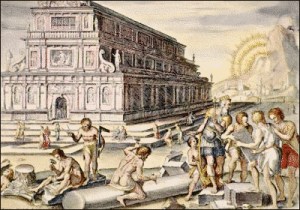
Temple_of_artemis

Temple of Artemis (courtesy of WPClipart)

Finally, Timothy was sent to Ephesus where he had a high level of responsibility in that church. We often think of him as a sort of pastor there (which may not be entirely wrong), but it is more appropriate probably that we think of him as an Apostolic representative under the direction of the Apostle Paul – speaking for the older man in guiding this local church during its early stages of ministry.

Ephesus was not a place for the faint-hearted to serve. It was a major city with many secular and Roman influences. It was also the location of the famous temple to Artemis (Diana) – one of the wonders of the ancient world and thus a place of idolatrous worship of the worst sort.

Reading between the lines a bit, it would appear that Timothy had a much more mellow and gentle personality than did his mentor, the Apostle Paul. This may not have always served him well in leadership, and thus Paul goads him at times toward greater boldness and stronger expressions.

And here is what we know about Titus …

Titus 1:4 – To Titus, my true son in our common faith: Grace and peace from God the Father and Christ Jesus our Savior.

5 The reason I left you in Crete was that you might put in order what was left unfinished and appoint elders in every town, as I directed you.

Less is known about Titus than is certain about Timothy. Unlike the latter, he was fully a Greek in background, not Jewish. He too is seen on several occasions with the Apostle Paul on his travels, occupying varied positions and responsibilities in the early days and travels of the great missionary.

After Paul’s release from imprisonment, he travelled to the island of Crete, located in the north-central Mediterranean Sea off the southwestern coast of modern Turkey and the southeastern coast of Greece.  As Paul travelled on, he left Titus behind to handle leadership responsibilities in the same way as Timothy.

With both Timothy and Titus, the letters are Paul writing instructions to his younger disciples. However, we should understand these letters as more than private correspondence. They were in fact letters for the whole church to see in these locations, and under inspiration for all churches to gain from, down to our time.

One thing we will see is that people are the same from generation to generation. Many of the challenges faced in leading a successful church venture in the first century are the same as we face today. It comes down to humbly leading and humbly following; and that makes sense, as we are the people saved by the one who humbled himself to death on our behalf.

Who Is this Guy? (Acts 3)

It is exceedingly rare to see someone’s entire personality change within a short window of time. Frankly, I couldn’t come up with a good illustration of having seen such a thing, nothing that rivals the complete reversal we see in the life of Peter before Pentecost as compared to after the coming of the Holy Spirit.

The disciples of Christ feared being left alone. That is clear in their response in John 14 about his teaching concerning going away to prepare a place for them. To comfort them, he speaks of the coming of the Holy Spirit to not just be with them, but to be in them …

And I will ask the Father, and he will give you another advocate to help you and be with you forever—the Spirit of truth. The world cannot accept him, because it neither sees him nor knows him. But you know him, for he lives with you and will be in you. (vss. 16,17)

In terms of rootedness and not drifting from the Lord, the indwelling Holy Spirit—God living within—makes all of the difference in the life of a believer. The issue now is a matter of yielding to the leading of the Spirit.

The change is no more evident anywhere than it was in the life of Peter. Just two months after denying Christ, Peter preaches publically at the Day of Pentecost, and 3,000 are saved.

Later, in the next chapter, he comes into the Temple with John, and a lame beggar calls out to them. Peter heals him – a fellow well-known to everyone there. It creates a scene. And then we read the following (from the guy who was ashamed to be identified with Christ two months earlier) …

Acts 3:11 – While the man held on to Peter and John, all the people were astonished and came running to them in the place called Solomon’s Colonnade. 12 When Peter saw this, he said to them: “Fellow Israelites, why does this surprise you? Why do you stare at us as if by our own power or godliness we had made this man walk? 13 The God of Abraham, Isaac and Jacob, the God of our fathers, has glorified his servant Jesus. You handed him over to be killed, and you disowned him before Pilate, though he had decided to let him go. 14 You disowned the Holy and Righteous One and asked that a murderer be released to you. 15 You killed the author of life, but God raised him from the dead. We are witnesses of this. 16 By faith in the name of Jesus, this man whom you see and know was made strong. It is Jesus’ name and the faith that comes through him that has completely healed him, as you can all see.

The result? A couple thousand more people come to know Christ. The authorities are enraged. And Peter and John are thrown in jail overnight.

The next day they appear before the same leaders who crucified Christ and boldly preach the full gospel message to them, and it says …

Acts 4:13 – When they saw the courage of Peter and John and realized that they were unschooled, ordinary men, they were astonished and they took note that these men had been with Jesus.

The religious leaders tell them to shut up, and then they let them go. But Peter and John basically say that they can’t stop talking about what they know is the truth.

What is the difference?  How does this transformation happen?

Before – Peter had drifted. He had become un-rooted.

After – Peter had the power of the Holy Spirit living within; and he chose to be anchored and rooted to that power, making all of the difference.

We may often feel like Peter did after the events of the denial, the crucifixion, resurrection … recalling our failures, yet knowing our true heart of belief that Christ is indeed the only way, truth and life.  We recall some gold medal moments of life, yet feel disqualified by our too-obvious failures and weaknesses and crashes in front of a stadium of people.

How can we be used of God?

The wonderful truth is that Christ invites us back to himself, to connect anew, to return from our drift, to find new life and forgiveness in him. In that place is empowerment to do bold things in his name in spite of our failures, even seeing them turned to gain for Christ as examples of his grace.

Rather than seeing ourselves as disqualified, we are newly-qualified to serve through the Spirit’s power. Paul wrote, “For the Spirit God gave us does not make us timid, but gives us power, love and self-discipline. So do not be ashamed of the testimony about our Lord…”

That quote is from the beginning of 2 Timothy. And as we end today with our two summer series, I’ll mention that we begin again right away this coming Sunday with a new seven-week study in the Pastoral Epistles of Timothy and Titus. It is to be called “Nuts and Bolts,” as we talk about the essentials of effective ministry.

That Disqualified Feeling (John 21)

Over the years I have done a lot of sports writing, particularly on baseball and specifically about the Baltimore Orioles. Often I have been in the position of evaluating a new player, such as a pitcher. There will be certain positives to write about, with the subject perhaps being one who has a low batting average against – meaning that the other team does not hit for a high percentage against him. Yet at the same time, this pitcher may statistically have a poor “K/BB ratio” … meaning that he walks too many people relative to the number that he strikes out. So it is a mixed bag of historic results relative to how qualified the player is for a contract with high expectations and compensation.

The Apostle Peter was a guy with a mixed background of high spiritual moments of faith, yet mingled with tremendous failures.

Consider some of his faith successes …

– Peter left everything behind to follow Jesus – his business, home, family … everything.

– He had faith to step out of the boat and walk on the water.

– He made great confessional acknowledgements of exactly who Jesus was: the Christ, the Son of God … the only one who possessed the words of eternal life.

But consider also some of Peter’s failures of faith …

– He made bombastic claims: rebuking Christ for his prediction of death… also declaring his allegiance to Christ, even to the point of death.

– He fell asleep on Christ in the Garden of Gethsemane.

– When Jesus is arrested, Peter impetuously strikes out and cuts off the ear of the servant of the high priest with a small sword that was functionally akin to a pocket knife.

And then there was the greatest failure of all. It is one thing to drop the ball in center field in a playoff game or screw up a contract proposal for the company; but it is another thing completely to deny the Son of God in the midst of a trial … doing it three times!  That is rather disqualifying, isn’t it?

But even in the midst of epic failure, Peter’s heart rang true at a core level. He loved the Lord, truly; but his failures were immense and obvious to all.

Yet there is great grace and restoration. And yet again, even as the sorrows of the death of Christ were turned to joy and relief for Peter in his observance of the empty tomb and appearances of Jesus alive with the disciples, Peter must have continued to believe that his horrific trifold denials had rendered him disqualified for whatever service may yet lie ahead.

Sometime soon after the resurrection in Jerusalem, Peter and the disciples were back home in Galilee, and Peter returns to that happy place of setting out in a boat, fishing. He must have thought that they had forgotten how to do this in the past three years of wandering around with Jesus; they were catching nothing. And a figure on the shore tells them to let down their nets on the other side of the boat, as if that would really make any difference … but it did … triggering also Peter’s remembrance of another such catch, thereby revealing that the figure on the shore is Jesus.

Swimming to the shore ahead of the boat, breakfast is already cooking. And there is Peter, just as he was in the recent past, looking into a fire … just as he had been when denying Christ three times. Here he is with Jesus, who speaks …

“Simon son of John, do you love me more than these?”

“Yes, Lord,” he said, “you know that I love you.”

Jesus said, “Feed my lambs.”

16 Again Jesus said, “Simon son of John, do you love me?”

He answered, “Yes, Lord, you know that I love you.”

Jesus said, “Take care of my sheep.”

17 The third time he said to him, “Simon son of John, do you love me?”

Peter was hurt because Jesus asked him the third time, “Do you love me?” He said, “Lord, you know all things; you know that I love you.”

Jesus said, “Feed my sheep. 18 Very truly I tell you, when you were younger you dressed yourself and went where you wanted; but when you are old you will stretch out your hands, and someone else will dress you and lead you where you do not want to go.” 19 Jesus said this to indicate the kind of death by which Peter would glorify God. Then he said to him, “Follow me!”

Three denials, three restorations. You’re forgiven. You’re restored. Get back to work fishing for men.

The lesson is this: Don’t underestimate grace. Don’t believe your failures – whatever they are, be they huge or be they numerous – are beyond forgiveness and restoration in the life of the true believer who loves the Lord.

The feeling of being disqualified lingers at times with all of us, if we are honest and introspective about the condition of our soul and our expressions of faith and service over the years. Though there are setbacks in the world of mortals, with grace, there are no permanent disqualifications. That is, unless you choose to stay out of the game, which is a stupid choice!

Along the way of the Christian life, did you become un-rooted? Did you drift away from God and truth? Get back in the game. There is a uniform with your name on it.

The true and better Elijah

Elijah still has a place within Jewish worship and ritual.  Elijah receives mention when grace is said after meals: “May God in his mercy send us the prophet Elijah.  He receives mention at circumcision ceremonies and at Passover.  Ralph Martin tells us that “at the beginning of the celebration of the Passover a special cup of wine, called “Elijah’s cup” is placed on the table.  When grace is said after the meal, a child opens the door in expectation of Elijah’s appearance and biblical passages are recited which express the hope of Jewish people for deliverance from the oppression.”[1]

All of this points us to someone greater than Elijah.  When Luke opens his biography of Jesus, John the Baptist is said to fulfill the role of Elijah, inasmuch as John would serve “to turn the hearts of the fathers to the children, and the disobedient to the wisdom of the just, to make ready for the Lord a people prepared” (Luke 1:17).  John would do this by pointing people to Jesus.  You see, in the first century world, religion had shot off in so many different directions that families would share the same roof but not necessarily the same faith.  The gospel became the answer to this sectarian problem, because the gospel united people under the banner of truth.

All this to say that Elijah’s story is theologically rich, to say the very least.  Because all of the Old Testament foreshadows the coming of Christ, how do we see Jesus reflected in the life of Elijah?  Naturally, we can answer this question in a variety of ways, but from our reading this week we can say three things in particular:

  • Jesus is the true and better Elijah

Elijah says: “My death will be the ultimate expression of my failure;” Jesus says: “My death will be the ultimate expression of God’s victory.”  Jesus is obedient—even to death by crucifixion—and in laying down his life he achieves victory over all the forces of sin and darkness and even over the “powers and principalities” that operate in today’s world by “triumphing over them in the cross” (Colossians 2:15).

  • Jesus is the true and better rock of Elijah

This isn’t a minor detail.  Remember the mighty wind that Elijah heard?  It was so strong that rocks tumbled away but Elijah remained shielded.  Jesus is the rock that bears the storms of God’s wrath that we might experience not God’s judgment but God’s mercy.  Because Jesus is our shield our lives are “hidden in Christ” (Colossians 3:3) and we can look to God not as judge but loving Father.

  • Jesus is the true and better Voice of God

John’s biography opens by telling readers that Jesus is the “Word” of God.  Jewish readers would instantly recognize this as representing the voice of God in creation and in Scripture; Greek readers would hear this as the voice of reason in secular philosophy.  But all truth comes from God, and now, in Jesus, that truth comes not as a set of ideas but in flesh and bone and sinew.  Jesus is the “Word made flesh,” and because of this we relate to God’s word not merely as a set of teachings to follow but a person to whom we may draw near.


[1] Ralph L. Smith, Micah-Malachi,  p. 342

Not over; never alone (1 Kings 19)

“What are you doing here, Elijah?”

This is the question we still haven’t addressed.  Elijah, as we’ve seen, has seen the highest of highs and the lowest of lows.  He’d been a hero, so to speak, the man through whom God showed his supremacy over the rival worship of Baal.

So why does he now feel like such a failure?

He’d made a 40-day pilgrimage to Mount Sinai.  This isn’t a small detail.  No one travels forty consecutive days unless they have a purpose.  Why Sinai?  Well, isn’t it obvious?  Sinai had a special place in the heart of every man, woman, and child who called Israel their home.  It was there that—through Moses—Israel had encountered God in the most direct way possible.  But as many times as I read this I can’t quite decode Elijah’s emotional state.  Is he going to Sinai to try and get closer to God—trying to recreate some feeling or some memory of Israel’s past connection to God?  Is he like us when we try and recapture the emotional highs of our spiritual past, perhaps the “glory days” of youth group?  Or maybe he’s angry—deeply, and profoundly angry—and he’s gone to Sinai to shake his fist in his Creator’s face.

Perhaps there’s a little bit of both found here, for Elijah’s words sound almost like a prepared statement:

10 Elijah replied, “I have zealously served the Lord God Almighty. But the people of Israel have broken their covenant with you, torn down your altars, and killed every one of your prophets. I am the only one left, and now they are trying to kill me, too.” (1 Kings 19:10)

Success can only carry us so far.  Elijah had indeed accomplished much—yet felt so inadequate as he faced toward the future.  He had drifted, to use our summer-long image; he had anchored so much of his faith in his own achievement that when the memory of victory no longer sustained him…well, that’s just it: he had nothing left.

You and I face a similar danger: we base our identities on our performance.  Or, said another way, God seems only as real as he is spectacular.  God seems near to us when we experience his miraculous provision, or when we are drawn to his throne through the intensity of a worship experience.  When these fade—as emotions inevitably do—we are left with an endless search to recapture the emotional highs of the past.  Another worship album.  Another book.  Another spiritual project.  Another Church.  And another.  And another.  And another.  Until one day we’re stripped of anything left at all.  Unless we anchor ourselves to something else, our faith will flicker and die.

11 “Go out and stand before me on the mountain,” the Lord told him. And as Elijah stood there, the Lord passed by, and a mighty windstorm hit the mountain. It was such a terrible blast that the rocks were torn loose, but the Lord was not in the wind. After the wind there was an earthquake, but the Lord was not in the earthquake. 12 And after the earthquake there was a fire, but the Lord was not in the fire. And after the fire there was the sound of a gentle whisper. 13 When Elijah heard it, he wrapped his face in his cloak and went out and stood at the entrance of the cave. (1 Kings 19:11-13a)

Elijah is surrounded by the spectacular.  But God is not “in” these events, we’re told.  Not in the winds, not in the earthquake, not in the fire.  He was found only in the “gentle whisper,” what other translations call the “still, small voice.”

There’s a powerful lesson here, about the voice of God.  Our faith is rooted not in the monumental experiences of life, but it is rooted instead on our devotion to our Creator’s voice.  The strength of our faith will invariably be a reflection of our connection to God’s Word—yes, the Bible.  For it is there, in those pages, that we find that the “still small voice” speaks across time and across cultures to peel back the layers of the obvious, and unveil for us the very heart of God.

God now repeats his earlier question to Elijah, and Elijah once again gives his same response.

And a voice said, “What are you doing here, Elijah?”

14 He replied again, “I have zealously served the Lord God Almighty. But the people of Israel have broken their covenant with you, torn down your altars, and killed every one of your prophets. I am the only one left, and now they are trying to kill me, too.” (1 Kings 19:13b-14)

Hearing him repeat himself almost makes me imagine Elijah, during his 40-day trek to Sinai, rolling these words over and over in his head, perhaps fantasizing about his chance to confront God directly.  But God now consoles him with some concrete instructions:

15 Then the Lord told him, “Go back the same way you came, and travel to the wilderness of Damascus. When you arrive there, anoint Hazael to be king of Aram. 16 Then anoint Jehu grandson of Nimshi to be king of Israel, and anoint Elisha son of Shaphat from the town of Abel-meholah to replace you as my prophet. 17 Anyone who escapes from Hazael will be killed by Jehu, and those who escape Jehu will be killed by Elisha!18 Yet I will preserve 7,000 others in Israel who have never bowed down to Baal or kissed him!” (1 Kings 19:15-18)

Elijah isn’t alone.  He never was.  And neither are we.

You may feel like your best days are already over.  And, for some of you, maybe it feels that way because your kids are grown, and they may or may not have turned out the way you would have desired.  But God promises you there’s something more to be done, that the horizon will always be a moving target.  Elijah could stand confident knowing that 7,000 others had his back.  You and I can stand confident knowing that we are one of a “great cloud of witnesses.”  God gave us each other for each other, that through our fellowship he might be known.  No cultural crisis is so great that it overshadows the call to draw near.  It’s not over.  It’s not over.  It’s not over.