Unknown's avatar

About Randy Buchman

I live in Western Maryland, and among my too many pursuits and hobbies, I regularly feed multiple hungry blogs. I played college baseball, coached championship cross country teams at Williamsport (MD) High School, and have been a sportswriter for various publications and online venues. My main profession was as the lead pastor of a church in Hagerstown called Tri-State Fellowship for 28 years before retiring in 2022. I'm also active in Civil War history and work/serve at Antietam National Battlefield with the Antietam Battlefield Guides organization. Occasionally I sleep.

No Pressure, Just Don’t Mess Up! (Leviticus 16:1-10)

Any of the several hundred great kids that ran cross country for me at Williamsport High School can tell you that the title today is my famous final word to them on the starting line of every race. I would say, “OK, remember now, no pressure – just don’t mess up” and then I’d immediately turn around and walk away. It was meant to communicate that while this was indeed a serious athletic event, we should also have fun while competing (and winning!).

Moses’ brother Aaron – the high priest for the nation of Israel – received pretty much the same message from God … although there was no humor whatsoever attached to it.

In today’s reading, we have laid out the prescription for the sacred annual event in Israel known as “The Day of Atonement” (listed on our calendars as Yom Kippur). To cover this chapter 16, we will use three days of readings – today gives the basic overview of it, with the following verses over the next two days detailing the precise activities to be observed.

The first verse gives a historical context as to exactly when this revelation came to Moses – to be passed along to Aaron. It was (presumably soon) after the death of two of Aaron’s four sons. This is recorded six chapters earlier in Leviticus 10. It is not exactly clear what Nadab and Abihu did when it says they came before the Lord with “unauthorized fire,” but whatever it was, it is apparent that they should have known better and were not being respectfully accurate about how they were serving. Fire came out from the Lord and killed them on the spot – and Aaron and the two other brothers were essentially told to stay there and not grieve over them at all! All of this happened on day #1 that Aaron and the boys were doing their priestly job.

So – back to our chapter 16 – if you were Aaron, and Moses came to you and said, “The Lord says that you are not to go behind the curtain into the most holy place where resides the ark and the mercy seat whenever you want to” … would you, in light of what you saw happen to your boys, be ready to listen and to apply every detail? And, oh my – there were details.

This ceremony was to occur but once a year; Aaron was to wear certain garments that were clean – and he was not to be stinky himself; Aaron was to prepare a sacrifice for himself and his family, since they were sinners; and Aaron was to secure two goats to make atonement for the sins of the people. We’ll circle back along with the text in the next two readings to go over these details and what they mean.

But today, let me make one main point about this whole scenario. Notice how in the old economy of the Old Covenant that it was a scary sort of “stay away” kind of thing? The picture is of a God who is filled with wrath at sin – one who could only be approached in very precise and prescribed ways. The reason for that is … well … God was angry at sin and could only be approached carefully in specified ways. But then, in the New Testament economy of the New Covenant, the attitude is one that is grace-enriched with an entire open-armed flavor of “Come unto me!”  Why the difference? In a word – “propitiation.”  God has been satisfied by the covering (atonement) for sin that was paid by the blood of Christ. Remember the moment of the death of Christ and what happened?…  The thick curtain in the Temple that separated off the most holy place was ripped open and people could even see into this place that was continuously hidden from sight – representing that the way to God had been opened to all.

Are you getting this? Are you picking up on these “cross words”??  They are important. How about making plans to worship with us this Friday night at 7:00?  We’ll talk about this some more.

16:1 The Lord spoke to Moses after the death of the two sons of Aaron who died when they approached the Lord. 2 The Lord said to Moses: “Tell your brother Aaron that he is not to come whenever he chooses into the Most Holy Place behind the curtain in front of the atonement cover on the ark, or else he will die. For I will appear in the cloud over the atonement cover.

3 “This is how Aaron is to enter the Most Holy Place: He must first bring a young bull for a sin offering and a ram for a burnt offering. 4 He is to put on the sacred linen tunic, with linen undergarments next to his body; he is to tie the linen sash around him and put on the linen turban. These are sacred garments; so he must bathe himself with water before he puts them on. 5 From the Israelite community he is to take two male goats for a sin offering and a ram for a burnt offering.

6 “Aaron is to offer the bull for his own sin offering to make atonement for himself and his household. 7 Then he is to take the two goats and present them before the Lord at the entrance to the tent of meeting. 8 He is to cast lots for the two goats—one lot for the Lord and the other for the scapegoat. 9 Aaron shall bring the goat whose lot falls to the Lord and sacrifice it for a sin offering. 10 But the goat chosen by lot as the scapegoat shall be presented alive before the Lord to be used for making atonement by sending it into the wilderness as a scapegoat.

Let’s identify two more cross words on the word search puzzle today – again, the final words list and all letters will be available three weeks from today!

Faith – This is “believe” in the sense that you place your “trust” in it. It must have been difficult to have trust/belief/faith that Jesus was the Son of God if you were there seeing him hang on that Roman cross. But there were 500 or more witnesses who could testify to the truth of resurrection – yet, faith remains necessary to apply the Gospel message, being saved by grace through faith.

Hell – All of the great enemies of God are defeated by the cross and the resurrection: Satan, sin, darkness, death … and hell.

puzzle day 6

The Devil Made Me Do It? (Romans 8:1-4)

I know, I know … I just lost everyone under age 50 with that title. It of course refers to the 40-years ago television program called “The Flip Wilson Show.”  I guess we were easily entertained in those days, because everyone tuned in to see Flip play the character roles of “Reverend Leroy” – the arrogant pastor of “The Church of What’s Happening Now,” and the sassy “Geraldine Jones” – the impulse-shopping African-American woman who would justify her every indulgence by saying, “The Devil made me do it!”  The phrase became a national catchphrase. Yep, it was a simpler time!

However, the problem we all know is that there is some power that makes us prone to sin – even after knowing Christ as Lord and Savior. The Apostle Paul was no exception to this. And in chapter seven of Romans he goes through a cyclic litany of “I don’t do what I want to do, and the things I do, I don’t want to do” utterances that express the frustrations of the war that goes on within the human heart and flesh. Then, in the final verses of that chapter he says, “What a wretched man I am! Who will rescue me from this body that is subject to death? Thanks be to God, who delivers me through Jesus Christ our Lord!”

So what about this evil power of the flesh and sin nature … are we bound by it? Are we condemned by it?  The beginning of chapter eight of Romans – our reading for today – says that we have no condemnation against us in Jesus Christ. The word for “condemnation” is one that means there is no sentence of punishment against us because of a guilty judgment. Why? Because God has been propitiated – satisfied – by the substitutionary payment of Jesus Christ on the cross.

The law condemned a man – showing him his sin and demonstrating the utter impossibility of keeping it … it was a law of sin and death. But a new law exists – the law of the Spirit – a power within that makes it possible to live a life of obedience to God and truth. And the old law of sin in the flesh leading to death – that law and power is what has been in actuality handed the sentence of condemnation (the same basic word as above).

So that is very cool! Sin and death is being judged, not us. Rather, we have the Spirit of God to help us live for Him as we yield to His presence within. The title of the first sermon of this “Cross Words” series last Sunday – “I’ve Been Judged” – no, we do not need to have that feeling; sin has been judged and God is satisfied with the payment.

8:1 Therefore, there is now no condemnation for those who are in Christ Jesus, because through Christ Jesus the law of the Spirit who gives life has set youfree from the law of sin and death. For what the law was powerless to do because it was weakened by the flesh,God did by sending his own Son in the likeness of sinful flesh to be a sin offering.And so he condemned sin in the flesh,in order that the righteous requirement of the law might be fully met in us, who do not live according to the flesh but according to the Spirit.

To those of you reading this on varied devices — to follow the ongoing puzzle you will need to go to the URL or in some fashion go to the web page to see it. The big day when the whole thing is revealed will be on April 22.

Again, here are two more words for the puzzle. I hope you are keeping track of this so that at the last week, you can take a shot at solving the whole thing and winning the grand prize!

Law – We talked about this today. The Law of Moses with all of its regulations – though it had a prescription for atoning for sin in a temporary way, it ultimately was powerless to defeat it and give a final victory. But Christ fulfilled the Law, and as the perfect sacrifice paid the penalty that rendered the Law of no lasting effect.

Freedom – The Law never made it possible for a person to feel free. There was always a sense of condemnation and requirement. But as it says in today’s reading, we have been set free from this by the great work of Jesus Christ. Freedom is indeed a “cross word.”

Puzzle day 5

Brothers and Sisters of Christ? Really? (Hebrews 2:10-17)

One of my favorite commercials of recent years is one about undershirts – featuring Michael Jordan and an “average Joe” carpet salesman, who happen to be seated next to each other on an airplane. The guy says to Jordan – referencing a person across the aisle, “That dude keeps looking over here; I must have sold him some carpet or something.” Oblivious to the obvious, the salesman nonetheless does observe that, unlike he and Michael Jordan, the dude across the aisle has an undershirt that wrinkles at the neckline – which he calls a bacon neck. He says of their shirts, “Ours lay flat … we’re like twins!”  Jordan sort of laughs and says, “No we’re not.”  (A video link to the commercial is HERE.)

The passage we read today talks about how Jesus Christ is not ashamed to call us his brothers and sisters. We are siblings with Christ? Is he like us? Yes, he is! No, he’s not!  Which is it?

This early portion of the book of Hebrews is addressing the issue of identifying exactly who Christ is – as both divine and man. Here, speaking of his humanity, a couple of Old Testament Scriptures from Psalms and Isaiah are quoted. And the writer defines how it was necessary for Christ to be fully human like us if he was to be the perfect sacrifice for sin. He had to be of the same flesh and blood substance to be an adequate substitute – as it would say later, that the blood of bulls and goats was insufficient for a final payment.

Yet at the same time, for Christ to be the perfect sacrifice, he had to be … perfect (possessing righteousness – to use another “cross word” we’ll talk about a lot later on in this series). And the only way he could be perfect is if he was deity. And the only way he could be both perfect God and perfect man would be if he was born of a virgin birth, conceived not by man but by the Spirit. This is why precise theology is important.

There is another Greek word, besides the one referenced the past two days in 1 John, that also carries the meaning “to placate, appease, propitiate.” And this word (hilaskomai) is used in today’s passage in verse 17 when it speaks about how Christ was “… fully human in every way, in order that he might become a merciful and faithful high priest in service to God, and that he might make atonement for the sins of the people.”  (In all of these passages, we begin to note how the words “propitiation” and “atonement” are closely connected.)

But here is the main idea for today:  The reason God is able to be satisfied (propitiated) with the offering of Christ is because Jesus was the perfect sacrifice to pay the price to cover the debt of sin and placate God’s wrath toward sin – because he was fully man … and therefore, in Christ, we are his brothers and sisters in the fullest sense within God’s family. Yes we are!

The only other occurrence of this word translated “make atonement” in today’s passage is over in Luke 18:13, where the repentant tax collector said, “Lord, be merciful to me, a sinner.”  He was saying in essence, “Lord be propitiated toward me, a sinner.”

Hebrews 2

10 In bringing many sons and daughters to glory, it was fitting that God, for whom and through whom everything exists, should make the pioneer of their salvation perfect through what he suffered. 11 Both the one who makes people holy and those who are made holy are of the same family. So Jesus is not ashamed to call them brothers and sisters. 12 He says, “I will declare your name to my brothers and sisters; in the assembly I will sing your praises.”

13 And again, “I will put my trust in him.”  And again he says, “Here am I, and the children God has given me.”

14 Since the children have flesh and blood, he too shared in their humanity so that by his death he might break the power of him who holds the power of death—that is, the devil— 15 and free those who all their lives were held in slavery by their fear of death. 16 For surely it is not angels he helps, but Abraham’s descendants. 17 For this reason he had to be made like them, fully human in every way, in order that he might become a merciful and faithful high priest in service to God, and that he might make atonement for the sins of the people. 18 Because he himself suffered when he was tempted, he is able to help those who are being tempted.

We add two more words of identification to the puzzle:

Tomb – The reality of the true death of Christ is important … that he was indeed in a tomb for three days. A tomb was necessary for a resurrection from the grave to occur.

Tree – The wooden cross is often referenced as the “tree.” … as in Galatians 3:13 about the curse of anyone who hangs on a tree.

Puzzle day 4

My Annual Day of Perspective (1 John 4:7-21)

I really could write a book about our parenting and family experiences in a home of five boys. Among the chapters would be one entitled “My Annual Day of Perspective.”

Our first three boys are rather close in age. And being a good father during the years when they were very young (toddlers, preschoolers, early elementary), it was my annual duty to take them shopping for Christmas presents for mommy. OH MY! They were always so pumped up about this, whereas I just hoped to survive it. I had already about exhausted my energies just thinking up what we might actually buy for Diana. And they would have a few ideas of their own … not exactly normal present ideas, nor something you could do with one-stop shopping.

So, off to the malls we would go. This of course required at least two car seats and a stroller. So there was the confusion of getting younger ones out of the seats without the older ones running into parking lot traffic. Next was the challenge of getting through multiple layers of the airlock doors at the store. One of them fell down inside the door, while simultaneously the door blew shut to knock the other two on top of the first one. This, of course, engendered a fight – as the boy on the bottom was angry that his brothers piled on him, while the guy on top was offended that the bottom one did not understand it was the door’s fault. But the result was that all three were crying and yelling.

Eventually, we would find something to buy and we would take it to the checkout counter. There I would ask, “So who is going to pay for this?”  Six eyes would look back at me as if to say, “Oh wow, we never thought about that until now!”  So, dad would say, “I’ll take care of it for you!” (And we would go home – the boys with presents for mom, and me with a perspective on what Diana went through every time she went to the store!)

In our reading today we see the second of the passages in the New Testament where the word “propitiation” is used (and again translated as “atoning sacrifice”). In both the sermon on Sunday and in the writing yesterday, we have spoken about how this term speaks of the idea of “satisfaction” – that God’s wrath toward sin was satisfied by the payment of Christ on the cross. BUT, it is even more amazing than that. The Father has not only been satisfied with the payment, HE made the payment possible through the sending of his Son! We could not pay. We possessed no currency to cover the price – having nothing more in our “moral pockets” than my boys had dollars in their britches. The one being satisfied also had to be the one who made the satisfaction possible. Certainly you have to agree with me that THIS.IS.AMAZING!

I have pulled out of this passage the portion that deals with the theological “cross word” we are studying – propitiation. But, do not miss the teaching of the context in which this concept was used as an example: the duty of Christians to love one another. Here is the main idea of this section: If you will consider the great love of God that He has first lavishly displayed upon us, certainly there is no reason why all of you who have received such grace should not, it turn, be committed to love one another!

The passage teaches that our love for one another had not only “ought to be,” but that it is the measure of the reality of the Spirit in us, it is what makes us complete, and it is what demonstrates whether we are people who are truthful or liars. Notice the ending where after such an argument is given, there is nothing remaining to write but to give it as a command – verse 21:  And he has given us this command: Anyone who loves God must also love their brother and sister.

God’s Love and Ours

Dear friends, let us love one another, for love comes from God. Everyone who loves has been born of God and knows God. Whoever does not love does not know God, because God is love. This is how God showed his love among us: He sent his one and only Son into the world that we might live through him. 10 This is love: not that we loved God, but that he loved us and sent his Son as an atoning sacrifice for our sins. 11 Dear friends, since God so loved us, we also ought to love one another. 12 No one has ever seen God; but if we love one another, God lives in us and his love is made complete in us.

13 This is how we know that we live in him and he in us: He has given us of his Spirit. 14 And we have seen and testify that the Father has sent his Son to be the Savior of the world. 15 If anyone acknowledges that Jesus is the Son of God, God lives in them and they in God. 16 And so we know and rely on the love God has for us.

God is love. Whoever lives in love lives in God, and God in them. 17 This is how love is made complete among us so that we will have confidence on the day of judgment: In this world we are like Jesus. 18 There is no fear in love. But perfect love drives out fear, because fear has to do with punishment. The one who fears is not made perfect in love.

19 We love because he first loved us. 20 Whoever claims to love God yet hates a brother or sister is a liar. For whoever does not love their brother and sister, whom they have seen, cannot love God, whom they have not seen. 21 And he has given us this command: Anyone who loves God must also love their brother and sister.

Let us identify two more words in the word search:

“Love” and “Agape” – You might say, “Well, I know that that is the same thing.”  Yes, it is – agape is a Greek word for love. But this is one of those occasions where the Greek language (of the New Testament) has several words that can be translated into English as “love” – there is eros which speak of a sensual love (hence like “erotic”) and philia which depicts a brotherly love (hence like “Philadelphia”). But agape is used of selfless, sacrificial, unconditional love – such as God has displayed for us. It is the glue of the cross words – love held Christ to the cross, not the nails.

Puzzle day 3

God is Satisfied (1 John 2:1-10)

(Note – Our reading today will be best understood in combination with tomorrow’s passage – just two chapters later – 1 John 4:7-21.)

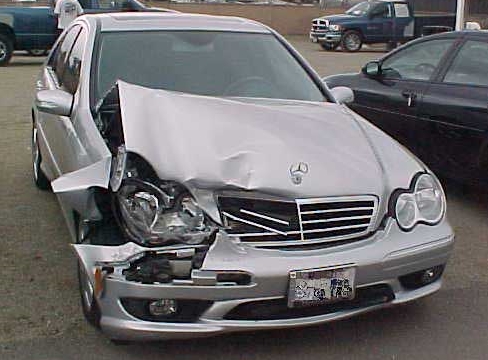
The first of our seven words that we are studying in this series is a big one – propitiation. I am going to guess that it is pretty unlikely that you have used that word sometime this past week or two in common conversation. A simple definition would be “satisfaction.” The concept is bigger than merely that – involving also what made satisfaction possible – but this one word definition can get us started on understanding this doctrine and this “cross word.”cropped mercedes pic

Have you ever been really angry about an unjust situation that came into your life – like, let’s say you just bought your dream car – a late model Benz 300 Series with only 40,000 miles. And sure enough, the next day this dude in an ’89 Ford pickup runs a red light and crushes the front end of your sweet chariot. Ugh! So, you have to go through an entire insurance process dealing with companies and police reports; and then you have to arrange to eventually take the car to the body shop … all the time wondering if you are really going to see the issue repaired. Then finally, when you get the car back … wow! The repair is so good that, in fact, the car looks better than it did when you bought it. And you are SATISFIED. Your anger is soothed and the debt is paid … the situation is rectified to your total satisfaction and you are at peace. In Bible theology talk, we might say that you have been “propitiated” … or that there has been a “propitiation” for your anger.

When you think about all the religions of the world who have presented their ideas about their “gods,” always included is the notion that the gods are angry – that they need to be placated in some fashion to keep the worshiper from being smashed like a stink bug. Remember the story of Elijah and the prophets of Baal? (1 Kings 18)  All the prophets of Baal built an altar and put a bull on it; then they called out “O Baal, hear us” and danced around, even cutting themselves in an effort to get their gods to send fire. After hours of this bizarre scene, Elijah even begins to taunt them – asking if their gods are asleep, or perhaps on a vacation cruise. And finally, God’s prophet comes to Him in the divinely-prescribed way – in faith with the sacrifice of a lamb. There is no display of human effort or deeds to appease an angry God, rather the sacrificed lamb pleases God – satisfying Him, and the answer is sent in most dramatic fashion.

And so, on the cross of Christ – the Lamb of God who takes away the sins of the world – the sacrifice of God’s perfect Son who takes our place of judgment – satisfies God’s wrath toward sin. Yes, God is angry at sin (as we talked about yesterday), but the payment of Christ is more than sufficient. The credit that covers the debt is enough to please God. And the passage today – written to those who already have that relationship with God through Christ – teaches that if any of them sin, there continues to be credit in the account that is sufficient to satisfy God. In fact, that credit is enough not only for them, but for the sins of the whole world (though not all accept and apply the payment).

In verse 2, the New International Version translates the Greek word hilasmos – which means “propitiation” by the words “the atoning sacrifice.” Many other translations have kept the actual word “propitiation” without giving an explanatory equivalent. The rest of the reading today goes on to a sort of application in our lives as it would relate to first obeying God, and then loving others. Essentially, if God has so forgiven us, it certainly would not look like we are the real deal if we cannot forgive another Christian for their sins against us.

This is good stuff … but it gets even better tomorrow!

2:1 My dear children, I write this to you so that you will not sin. But if anybody does sin, we have an advocate with the Father—Jesus Christ, the Righteous One. 2 He is the atoning sacrifice for our sins, and not only for ours but also for the sins of the whole world.

We know that we have come to know him if we keep his commands. Whoever says, “I know him,” but does not do what he commands is a liar, and the truth is not in that person. But if anyone obeys his word, love for God is truly made complete in them. This is how we know we are in him:Whoever claims to live in him must live as Jesus did.

Dear friends, I am not writing you a new command but an old one, which you have had since the beginning. This old command is the message you have heard. Yet I am writing you a new command; its truth is seen in him and in you, because the darkness is passing and the true light is already shining.

Anyone who claims to be in the light but hates a brother or sister is still in the darkness. 10 Anyone who loves their brother and sister lives in the light, and there is nothing in them to make them stumble. 11 But anyone who hates a brother or sister is in the darkness and walks around in the darkness. They do not know where they are going, because the darkness has blinded them.

We identify two new words in the puzzle again today:

Fall – By this, we are speaking of the “fall of man” – meaning the original sin that caused mankind to fall from a perfect relationship and standing with God… and incur the debt of sin and the curse of death.

Dark – Darkness symbolizes sin and stands as the opposite of God and light. The Bible speaks of a kingdom of light and a kingdom of darkness – the latter of which is defeated by the cross. Of course, at the time of the crucifixion, a darkness descends upon the earth at midday.

Puzzle 2

No Excuses for Mankind’s Situation (Romans 1:16-32)

Before talking about today’s Scripture reading, let me welcome you to the first of what will be a total of 30 devotional readings and writings (Monday to Friday for six weeks) that supplement the current Tri-State Fellowship teaching series called “Cross Words.”  These writings are timed daily to hit at 6:00 each morning, and I remind you that you may have them delivered automatically to your email.

The Reason for Cross Words

Of course, what we mean by cross words are those Bible and doctrinal terms that are connected to the work of Jesus Christ in dying on the cross of Calvary to save us from the debt of sin. But before we can begin to delve into these terms, I thought it appropriate to take one written session to be reminded why the cross was necessary.

So, Just How Bad are Things?

The answer – worse than you can even imagine … as bad as it could possibly be. It is a death sentence.

The Great Epistle to the Romans

The Apostle Paul’s premier writing is the book of Romans – a message that describes in greatest detail all which God has done through Jesus Christ to make us acceptable to Him in His perfect kingdom and presence. In a word, to be His presence, we must be perfect – righteous. We need righteousness – and that is the theme of the Book of Romans … as it says:

16 For I am not ashamed of the gospel, because it is the power of God that brings salvation to everyone who believes: first to the Jew, then to the Gentile. 17 For in the gospel the righteousness of God is revealed—a righteousness that is by faith from first to last, just as it is written: “The righteous will live by faith.”

Paul begins to describe this salvation in chapter 3, verse 21 and following. But first, Paul writes from 1:18 to 3:20 to prove that all mankind is totally lost and without hope – condemned by sin. The style of writing throughout this section is of a prosecuting attorney presenting a foolproof case of condemnation against the accused criminal – all mankind. You may have heard some preacher at some point say that, when sharing the Gospel with someone, you have to get them lost before you can get them saved. Well, that is a kind of simplistic statement, but it contains a lot of truth.

My wife Diana comes from a largely Pennsylvania Dutch family background. And it is from her grandfather that I heard a term I had never encountered before: “Nix Nootz.”  This was a way of most often describing a child who was misbehaving, but doing it in a sort of cute and endearing way. Unfortunately, that is how many people believe God looks at our sins and our all-too-human condition … a sort of “boys will be boys” way of it not really being THAT big of a deal! After all, they’re just human!

But as you read through this passage, you see that there are no excuses. Mankind is lost in sin. It is not even a matter that, well, some folks just haven’t heard the truth very clearly, so they should be acceptable and excusable if anyone is! But the answer even there is a solid “no.”  The creation shouts out that there is a God to be sought after and to be known and obeyed – leaving them also without excuse.

There are no excuses whatsoever. Man in his own state and condition is totally, utterly, impossibly lost and condemned to death and separation from God. In theology, this is what is termed “total depravity” … which does not mean that every person is as bad as they could be, but that every person is lost and possesses nothing in themselves of righteousness that might give them any merit with God.

Simply stated, man is lost … needing “cross words” to find a connection of salvation with God and any hope for eternity. And that is what we are going to talk and write about over these six weeks.  (If you read today’s Scripture in your own Bible or translation, be sure to look under this attached Scripture reading for the first of the daily puzzles.)

God’s Wrath Against Sinful Humanity

18 The wrath of God is being revealed from heaven against all the godlessness and wickedness of people, who suppress the truth by their wickedness, 19 since what may be known about God is plain to them, because God has made it plain to them. 20 For since the creation of the world God’s invisible qualities—his eternal power and divine nature—have been clearly seen, being understood from what has been made, so that people are without excuse.

21 For although they knew God, they neither glorified him as God nor gave thanks to him, but their thinking became futile and their foolish hearts were darkened. 22 Although they claimed to be wise, they became fools 23 and exchanged the glory of the immortal God for images made to look like a mortal human being and birds and animals and reptiles.

24 Therefore God gave them over in the sinful desires of their hearts to sexual impurity for the degrading of their bodies with one another. 25 They exchanged the truth about God for a lie, and worshiped and served created things rather than the Creator—who is forever praised. Amen.

26 Because of this, God gave them over to shameful lusts. Even their women exchanged natural sexual relations for unnatural ones. 27 In the same way the men also abandoned natural relations with women and were inflamed with lust for one another. Men committed shameful acts with other men, and received in themselves the due penalty for their error.

28 Furthermore, just as they did not think it worthwhile to retain the knowledge of God, so God gave them over to a depraved mind, so that they do what ought not to be done. 29 They have become filled with every kind of wickedness, evil, greed and depravity. They are full of envy, murder, strife, deceit and malice. They are gossips, 30 slanderers, God-haters, insolent, arrogant and boastful; they invent ways of doing evil; they disobey their parents; 31 they have no understanding, no fidelity, no love, no mercy. 32 Although they know God’s righteous decree that those who do such things deserve death, they not only continue to do these very things but also approve of those who practice them.

Here is the daily puzzle where we will regularly identify a couple of words every day… for a total of 66 cross words altogether. On April 22nd, the missing letters will be filled in to spell something for which YOU may be a prizewinner if you can be the first to identify what it says.

Our words for today:

Wrath – This speaks of God’s anger toward sin. As Christ took our sins upon himself, God’s wrath executed a judgment of them upon the cross.

Curse – No, not saying something wrong … this means that sin entered the human race through Adam’s rebellion, and the curse of death has passed down to everyone (except Christ), making us unacceptable in that state to a perfect God.

puzzle 1

Moses was THE MAN! (Deuteronomy 34:1-12)

We occasionally hear stories of someone who, in whatever field or endeavor, worked their whole life toward a goal, only to fall just short of it at the end. Moses was like that in many ways. He was jealous for his kindred people and led the new nation of Israel out of Egypt, right up to the very door of the Promised Land, only to be unable to enter into it himself. But God in his grace made it possible for Moses to see it from afar. And in the moments before his death, God took him to a place where the land could be seen – an incredible view from Mt. Nebo, then and now (see illustration). Moses saw it, died at that spot, and was buried by the Lord himself!

The ending paragraphs serve as a bridge to the next book – the book of Joshua and the conquest of the Promised Land. The account here records that Joshua was successful in the leadership of Israel because God was with him, and because Moses had transferred the leadership to him by laying hands on him.

The final paragraph is an amazing eulogy. The text says that there has not been another prophet in Israel like Moses – he was the #1 guy!  Pretty impressive!  Moses knew God face to face; there was no other one who had quite that same relationship. The final words speak of how God used Moses powerfully to release the people from Israel and to guide them all along the way.

For those who have made the journey with us through Deuteronomy, I hope you have been even marginally as blessed as I have been through this great piece of the Scriptures. Moses (pictured) and I both thank you for reading our stuff! I hope you have been revived! I believe we have been as a church.

In two days we begin a new series entitled “Cross Words” … and again there will be Monday-Friday devotionals throughout the six-week period. I encourage you to sign up for these by going to www.CrossWordsTSF.org … and follow along with us again!

The Death of Moses

34 Then Moses climbed Mount Nebo from the plains of Moab to the top of Pisgah, across from Jericho. There the Lord showed him the whole land—from Gilead to Dan, 2 all of Naphtali, the territory of Ephraim and Manasseh, all the land of Judah as far as the Mediterranean Sea, 3 the Negev and the whole region from the Valley of Jericho, the City of Palms, as far as Zoar. 4 Then the Lord said to him, “This is the land I promised on oath to Abraham, Isaac and Jacob when I said, ‘I will give it to your descendants.’ I have let you see it with your eyes, but you will not cross over into it.”

5 And Moses the servant of the Lord died there in Moab, as the Lord had said. 6 He buried him in Moab, in the valley opposite Beth Peor, but to this day no one knows where his grave is. 7 Moses was a hundred and twenty years old when he died, yet his eyes were not weak nor his strength gone. 8 The Israelites grieved for Moses in the plains of Moab thirty days, until the time of weeping and mourning was over.

9 Now Joshua son of Nun was filled with the spirit of wisdom because Moses had laid his hands on him. So the Israelites listened to him and did what the Lord had commanded Moses.

10 Since then, no prophet has risen in Israel like Moses, whom the Lord knew face to face, 11 who did all those signs and wonders the Lord sent him to do in Egypt—to Pharaoh and to all his officials and to his whole land. 12 For no one has ever shown the mighty power or performed the awesome deeds that Moses did in the sight of all Israel.

Final Words of Blessing (Deuteronomy 33:1-29)

In this penultimate devotional before ending with the death of Moses tomorrow, we come upon one of the most cryptic and difficult of biblical passages. The text is full of very unusual words and constructions that are difficult to translate and understand without getting into some pretty deep Semitic language family weeds.

Here are some general things we may say about it:

These are final words of blessing from Moses over the nation of Israel and its tribes. The chapter opens with some poetic references to the manner by which God’s blessings came to Israel from over the Sinai – as Moses led the nation out of Egypt, receiving the Law, etc.

The tribe by tribe blessings anticipate some of the challenges and blessing each would experience. Simeon is strangely not included, perhaps in anticipation as to how it would be absorbed over time into the tribe of Judah.

In the culture of the times, it was customary for fathers to impart blessings just before death. We might especially recall the scene of Jacob and his pronouncements in Genesis 49 … or also Isaac with Jacob and Esau. Final words are important ones and often remembered – especially when the person uttering them is of a good mind, while knowing the end is near.

In any event, by application, it may be a very healthy exercise for us to consider how we leave a verbal legacy to our children and those beyond them. There can be tremendous impact in this effort. Since we cannot usually guarantee how that scenario may develop – how sudden it may be or how compromised our minds may become – there could be some great benefit in having some kind of written record of thoughts, values, perspectives, blessings, etc. that is prepared to be left to those coming behind us. This is a way of discipling generations – of having an impact even after we are gone.

Moses Blesses the Tribes

33 This is the blessing that Moses the man of God pronounced on the Israelites before his death.He said:“The Lord came from Sinai and dawned over them from Seir; he shone forth from Mount Paran. He came with[a] myriads of holy ones from the south, from his mountain slopes.[b]

Surely it is you who love the people; all the holy ones are in your hand. At your feet they all bow down, and from you receive instruction,the law that Moses gave us, the possession of the assembly of Jacob.He was king over Jeshurun[c] when the leaders of the people assembled, along with the tribes of Israel.

“Let Reuben live and not die, nor[d] his people be few.”

And this he said about Judah: “Hear, Lord, the cry of Judah; bring him to his people. With his own hands he defends his cause. Oh, be his help against his foes!”

About Levi he said: “Your Thummim and Urim belong to your faithful servant. You tested him at Massah; you contended with him at the waters of Meribah. He said of his father and mother, ‘I have no regard for them.’  He did not recognize his brothers or acknowledge his own children, but he watched over your word and guarded your covenant.10 He teaches your precepts to Jacob and your law to Israel. He offers incense before you and whole burnt offerings on your altar.11 Bless all his skills, Lord, and be pleased with the work of his hands. Strike down those who rise against him, his foes till they rise no more.”

12 About Benjamin he said: “Let the beloved of the Lord rest secure in him, for he shields him all day long, and the one the Lord loves rests between his shoulders.”

13 About Joseph he said: “May the Lord bless his land with the precious dew from heaven above and with the deep waters that lie below; 14 with the best the sun brings forth and the finest the moon can yield;15 with the choicest gifts of the ancient mountains and the fruitfulness of the everlasting hills;16 with the best gifts of the earth and its fullness and the favor of him who dwelt in the burning bush. Let all these rest on the head of Joseph, on the brow of the prince among[e] his brothers.17 In majesty he is like a firstborn bull; his horns are the horns of a wild ox. With them he will gore the nations, even those at the ends of the earth. Such are the ten thousands of Ephraim; such are the thousands of Manasseh.”

18 About Zebulun he said: “Rejoice, Zebulun, in your going out, and you, Issachar, in your tents.
19 They will summon peoples to the mountain and there offer the sacrifices of the righteous; they will feast on the abundance of the seas, on the treasures hidden in the sand.”

20 About Gad he said: “Blessed is he who enlarges Gad’s domain! Gad lives there like a lion, tearing at arm or head.21 He chose the best land for himself; the leader’s portion was kept for him. When the heads of the people assembled, he carried out the Lord’s righteous will, and his judgments concerning Israel.”

22 About Dan he said: “Dan is a lion’s cub, springing out of Bashan.”

23 About Naphtali he said: “Naphtali is abounding with the favor of the Lord and is full of his blessing; he will inherit southward to the lake.”

24 About Asher he said: “Most blessed of sons is Asher; let him be favored by his brothers, and let him bathe his feet in oil.25 The bolts of your gates will be iron and bronze, and your strength will equal your days.

26 “There is no one like the God of Jeshurun, who rides across the heavens to help you and on the clouds in his majesty.27 The eternal God is your refuge, and underneath are the everlasting arms. He will drive out your enemies before you, saying, ‘Destroy them!’

28 So Israel will live in safety; Jacob will dwell[f] secure in a land of grain and new wine, where the heavens drop dew.29 Blessed are you, Israel! Who is like you, a people saved by the Lord? He is your shield and helper and your glorious sword. Your enemies will cower before you, and you will tread on their heights.”

Footnotes:

  1. Deuteronomy 33:2 Or from
  2. Deuteronomy 33:2 The meaning of the Hebrew for this phrase is uncertain.
  3. Deuteronomy 33:5 Jeshurun means the upright one, that is, Israel; also in verse 26.
  4. Deuteronomy 33:6 Or but let
  5. Deuteronomy 33:16 Or of the one separated from
  6. Deuteronomy 33:28 Septuagint; Hebrew Jacob’s spring is

Moses, the Rock Star (Deuteronomy 31:30—32:52)

In the history of Israel, Moses really is a rock star character. This is evident in debates that Jesus had with the Pharisees – who venerated Moses above all characters. And Moses was the rock star in bring water out of the rock – supplying for Israel throughout their wilderness wanderings. And here in today’s passage, Moses becomes a sort of rock star by writing a song that will, by its nature, become #1 on the charts in all Israel. As well, it is interesting to see how often in this song the idea of a rock is pictured to communicate a truth – even calling God the Rock! (Did you notice how the worship team did a postlude with the song “Rock of Ages” on Sunday… very fitting choice!)

You will certainly look at this song and think it is not likely that sing-able, as it has a lot of words. It would be interesting to be able to hear what it might have sounded like in ancient Israel.

The song starts with praise for the perfect God – the Rock! It rehearses the history of Israel, how God had blessed them and selected them among all peoples. Israel was special, selected, preserved, protected and blessed. But the nation grew fat on the blessings God had given – ultimately forgetting the one who saved them. They were therefore rejected and subjected to God’s judgment. This could only happen if God had rejected them for their rebellion, because the rock of their enemies was not like Israel’s ROCK, and the only way Israel could lose is by God abandoning them because they had first abandoned Him (vss. 30-31).

And though this judgment would be severe, ultimately Israel would be purified and preserved. God’s enemies will be defeated. And Moses and Joshua remind the people, as the song is given to them, that these are not idle words. God is just, and these words would be their life. That is indeed a timeless truth.

The Song of Moses

31:30 And Moses recited the words of this song from beginning to end in the hearing of the whole assembly of Israel:

32:1  Listen, you heavens, and I will speak; hear, you earth, the words of my mouth.
Let my teaching fall like rain and my words descend like dew, like showers on new grass, like abundant rain on tender plants.

I will proclaim the name of the Lord. Oh, praise the greatness of our God!
He is the Rock, his works are perfect, and all his ways are just. A faithful God who does no wrong, upright and just is he.

They are corrupt and not his children; to their shame they are a warped and crooked generation.
Is this the way you repay the Lord, you foolish and unwise people?
Is he not your Father, your Creator,[a] who made you and formed you?

Remember the days of old; consider the generations long past. Ask your father and he will tell you, your elders, and they will explain to you.
When the Most High gave the nations their inheritance, when he divided all mankind, he set up boundaries for the peoples according to the number of the sons of Israel.[b]
For the Lord’s portion is his people, Jacob his allotted inheritance.

10 In a desert land he found him, in a barren and howling waste. He shielded him and cared for him; he guarded him as the apple of his eye,
11 like an eagle that stirs up its nest and hovers over its young, that spreads its wings to catch them and carries them aloft.
12 The Lord alone led him; no foreign god was with him.

13 He made him ride on the heights of the land and fed him with the fruit of the fields.
He nourished him with honey from the rock, and with oil from the flinty crag,
14 with curds and milk from herd and flock and with fattened lambs and goats, with choice rams of Bashan and the finest kernels of wheat. You drank the foaming blood of the grape.

15 Jeshurun[c] grew fat and kicked; filled with food, they became heavy and sleek. They abandoned the God who made them and rejected the Rock their Savior.
16 They made him jealous with their foreign gods and angered him with their detestable idols.
17 They sacrificed to false gods, which are not God— gods they had not known, gods that recently appeared, gods your ancestors did not fear.
18 You deserted the Rock, who fathered you; you forgot the God who gave you birth.

19 The Lord saw this and rejected them because he was angered by his sons and daughters.
20 “I will hide my face from them,” he said, “and see what their end will be; for they are a perverse generation, children who are unfaithful.
21 They made me jealous by what is no god and angered me with their worthless idols. I will make them envious by those who are not a people; I will make them angry by a nation that has no understanding.
22 For a fire will be kindled by my wrath, one that burns down to the realm of the dead below. It will devour the earth and its harvests and set afire the foundations of the mountains.

23 “I will heap calamities on them and spend my arrows against them.
24 I will send wasting famine against them, consuming pestilence and deadly plague; I will send against them the fangs of wild beasts, the venom of vipers that glide in the dust.
25 In the street the sword will make them childless; in their homes terror will reign. The young men and young women will perish, the infants and those with gray hair.
26 I said I would scatter them and erase their name from human memory,
27 but I dreaded the taunt of the enemy, lest the adversary misunderstand and say, ‘Our hand has triumphed; the Lord has not done all this.’”

28 They are a nation without sense, there is no discernment in them.
29 If only they were wise and would understand this and discern what their end will be!
30 How could one man chase a thousand, or two put ten thousand to flight, unless their Rock had sold them, unless the Lord had given them up?
31 For their rock is not like our Rock, as even our enemies concede.
32 Their vine comes from the vine of Sodom and from the fields of Gomorrah. Their grapes are filled with poison, and their clusters with bitterness.
33 Their wine is the venom of serpents, the deadly poison of cobras.

34 “Have I not kept this in reserve and sealed it in my vaults?
35 It is mine to avenge; I will repay.  In due time their foot will slip; their day of disaster is near
and their doom rushes upon them.”

36 The Lord will vindicate his people and relent concerning his servants when he sees their strength is gone and no one is left, slave or free.[d]
37 He will say: “Now where are their gods, the rock they took refuge in,
38 the gods who ate the fat of their sacrifices and drank the wine of their drink offerings?
Let them rise up to help you! Let them give you shelter!

39 “See now that I myself am he! There is no god besides me. I put to death and I bring to life, I have wounded and I will heal, and no one can deliver out of my hand.
40 I lift my hand to heaven and solemnly swear:  As surely as I live forever,
41 when I sharpen my flashing sword and my hand grasps it in judgment, I will take vengeance on my adversaries and repay those who hate me.
42 I will make my arrows drunk with blood, while my sword devours flesh: the blood of the slain and the captives, the heads of the enemy leaders.”

43 Rejoice, you nations, with his people,[e][f] for he will avenge the blood of his servants; he will take vengeance on his enemies and make atonement for his land and people.

44 Moses came with Joshua[g] son of Nun and spoke all the words of this song in the hearing of the people. 45 When Moses finished reciting all these words to all Israel, 46 he said to them, “Take to heart all the words I have solemnly declared to you this day, so that you may command your children to obey carefully all the words of this law. 47 They are not just idle words for you—they are your life. By them you will live long in the land you are crossing the Jordan to possess.”

Moses to Die on Mount Nebo

48 On that same day the Lord told Moses, 49 “Go up into the Abarim Range to Mount Nebo in Moab, across from Jericho, and view Canaan, the land I am giving the Israelites as their own possession.50 There on the mountain that you have climbed you will die and be gathered to your people, just as your brother Aaron died on Mount Hor and was gathered to his people. 51 This is because both of you broke faith with me in the presence of the Israelites at the waters of Meribah Kadesh in the Desert of Zin and because you did not uphold my holiness among the Israelites.  52 Therefore, you will see the land only from a distance; you will not enter the land I am giving to the people of Israel.”

Footnotes:

  1. Deuteronomy 32:6 Or Father, who bought you
  2. Deuteronomy 32:8 Masoretic Text; Dead Sea Scrolls (see also Septuagint) sons of God
  3. Deuteronomy 32:15 Jeshurun means the upright one, that is, Israel.
  4. Deuteronomy 32:36 Or and they are without a ruler or leader
  5. Deuteronomy 32:43 Or Make his people rejoice, you nations
  6. Deuteronomy 32:43 Masoretic Text; Dead Sea Scrolls (see also Septuagint) people, / and let all the angels worship him, /
  7. Deuteronomy 32:44 Hebrew Hoshea, a variant of Joshua

Not Exactly a Glowing Endorsement (Deuteronomy 31:14-29)

We read today through a passage that is filled with large contrasts. We see the goodness of God, yet we read of the certain declension of the nation of Israel. The faith of Moses and Joshua and their consequent blessings stand in stark contrast to the coming judgments upon the people for their rejection of God.

Again, the Lord tells Moses his end is near, and to appear before the Lord at the tent of meeting (the tabernacle = the localized presence of God) with Joshua, his younger replacement.

The communication from God to Moses and Joshua is that, though the presumption of success in conquering the land remains, the revelation is that before long after that time, the people would embrace foreign gods and forget the Lord. Moses is told to write a song – as this tune and text would be remembered even after other truths were forgotten, and the song would testify against Israel at the time of their judgment. (Looking at this song will be the theme tomorrow.)

Put yourself in the sandals of these guys. First, Moses is told he is down to mere days before he’ll be taken from the earth. And then Joshua, though bestowed with the great honor of leading a nation into victorious conquest, hears also that the fruit of it would be relatively short-lived. This would be like being named the coach of a NFL team and being told you will certainly win the Super Bowl in your first season, but from that point on, there would be increasingly losing seasons until the franchise was essentially eliminated. (But don’t worry Joshua, it’s not your fault!)

The final paragraph today speaks of the finalization of the writing of this book (Deuteronomy). Moses gives it to the Levites (the spiritual leadership tribe of Israel) to put beside the Ark of the Covenant – not within it. Inside the box were the tablets of the 10 Commandments. Again, Moses’ definitive statements as to the certain rebellion of the nation are shocking in their forthrightness… like verse 27: For I know how rebellious and stiff-necked you are. If you have been rebellious against the Lord while I am still alive and with you, how much more will you rebel after I die!  If it were not so serious and so sad, one almost has to laugh at the brash nature of it. Imagine the dinner table that night in the homes of those Levites, “Old Moses sure has been a great leader, but he has gotten so cranky and belligerent these days – calling us names and all!”

Stepping back from the context of the nation of Israel, and seeking to bring some timeless truth understanding to this passage, it does present again the natural heart of mankind to fall away from the Lord. Unless there is a commitment of each generation to remember the Lord and stay faithful, the natural drift will be away from truth and away from the faithfulness of generations who did honor God. Surely all of us can see this in our family systems (if we have had previous generations who honored the Lord). I think of the incredible faith of my great-grandparents – totally exemplary in every way. Now, just three generations later, I would estimate that only maybe one-third of their descendants care about these values. Declension is easy; faithfulness is hard work … and is why we need to constantly REVIVE!

Israel’s Rebellion Predicted

14 The Lord said to Moses, “Now the day of your death is near. Call Joshua and present yourselves at the tent of meeting, where I will commission him.” So Moses and Joshua came and presented themselves at the tent of meeting.

15 Then the Lord appeared at the tent in a pillar of cloud, and the cloud stood over the entrance to the tent. 16 And the Lord said to Moses: “You are going to rest with your ancestors, and these people will soon prostitute themselves to the foreign gods of the land they are entering. They will forsake me and break the covenant I made with them. 17 And in that day I will become angry with them and forsake them; I will hide my face from them, and they will be destroyed. Many disasters and calamities will come on them, and in that day they will ask, ‘Have not these disasters come on us because our God is not with us?’ 18 And I will certainly hide my face in that day because of all their wickedness in turning to other gods.

19 “Now write down this song and teach it to the Israelites and have them sing it, so that it may be a witness for me against them. 20 When I have brought them into the land flowing with milk and honey, the land I promised on oath to their ancestors, and when they eat their fill and thrive, they will turn to other gods and worship them, rejecting me and breaking my covenant. 21 And when many disasters and calamities come on them, this song will testify against them, because it will not be forgotten by their descendants. I know what they are disposed to do, even before I bring them into the land I promised them on oath.” 22 So Moses wrote down this song that day and taught it to the Israelites.

23 The Lord gave this command to Joshua son of Nun: “Be strong and courageous, for you will bring the Israelites into the land I promised them on oath, and I myself will be with you.”

24 After Moses finished writing in a book the words of this law from beginning to end, 25 he gave this command to the Levites who carried the ark of the covenant of the Lord: 26 “Take this Book of the Law and place it beside the ark of the covenant of the Lord your God. There it will remain as a witness against you. 27 For I know how rebellious and stiff-necked you are. If you have been rebellious against the Lord while I am still alive and with you, how much more will you rebel after I die! 28 Assemble before me all the elders of your tribes and all your officials, so that I can speak these words in their hearing and call the heavens and the earth to testify against them. 29 For I know that after my death you are sure to become utterly corrupt and to turn from the way I have commanded you. In days to come, disaster will fall on you because you will do evil in the sight of the Lord and arouse his anger by what your hands have made.”